

Somersby’s rural and lifestyle blocks demand a different approach to outdoor building. Properties spanning two to forty hectares — whether horse agistment, hobby farms, or executive acreage retreats — require structures built to a scale and specification that suburban pergola builders simply aren’t equipped to deliver.
From the valley floor properties along Somersby Road to the elevated hillside blocks with views toward Gosford and the ridgeline, the terrain varies significantly. Soil conditions, slope, access constraints, and bushfire attack level requirements all shape how a pergola is designed, engineered, and constructed before a single post goes in the ground.
This is outdoor living on rural terms: large beam spans, generous entertaining footprints, outdoor cooking infrastructure, and structures that sit comfortably within the natural bush setting rather than against it. Somersby acreage properties deserve pergolas built to match their scale.
What to Know About Pergolas on Somersby Acreage Properties
Somersby is a semi-rural locality within the Central Coast Council area, characterised by large lifestyle blocks ranging from two to forty-plus hectares. Pergola construction on these properties involves considerations that go well beyond a standard suburban build:
Council approval — structures over 20sqm or within asset protection zones require a Development Application through Central Coast Council
Bushfire Attack Level (BAL) compliance — many Somersby properties fall within BAL-12.5 to BAL-29 zones, requiring specific materials and construction methods
Engineered footings — valley floor and hillside sites demand individual footing designs based on soil and slope assessment.
Extended beam spans — rural-scale entertaining areas typically require spans of five to eight metres between posts.
Equipment access — machinery and material delivery must account for long driveways, gates, and soft ground conditions.
Pergola Design for Acreage Properties: Scale, Span & Structure
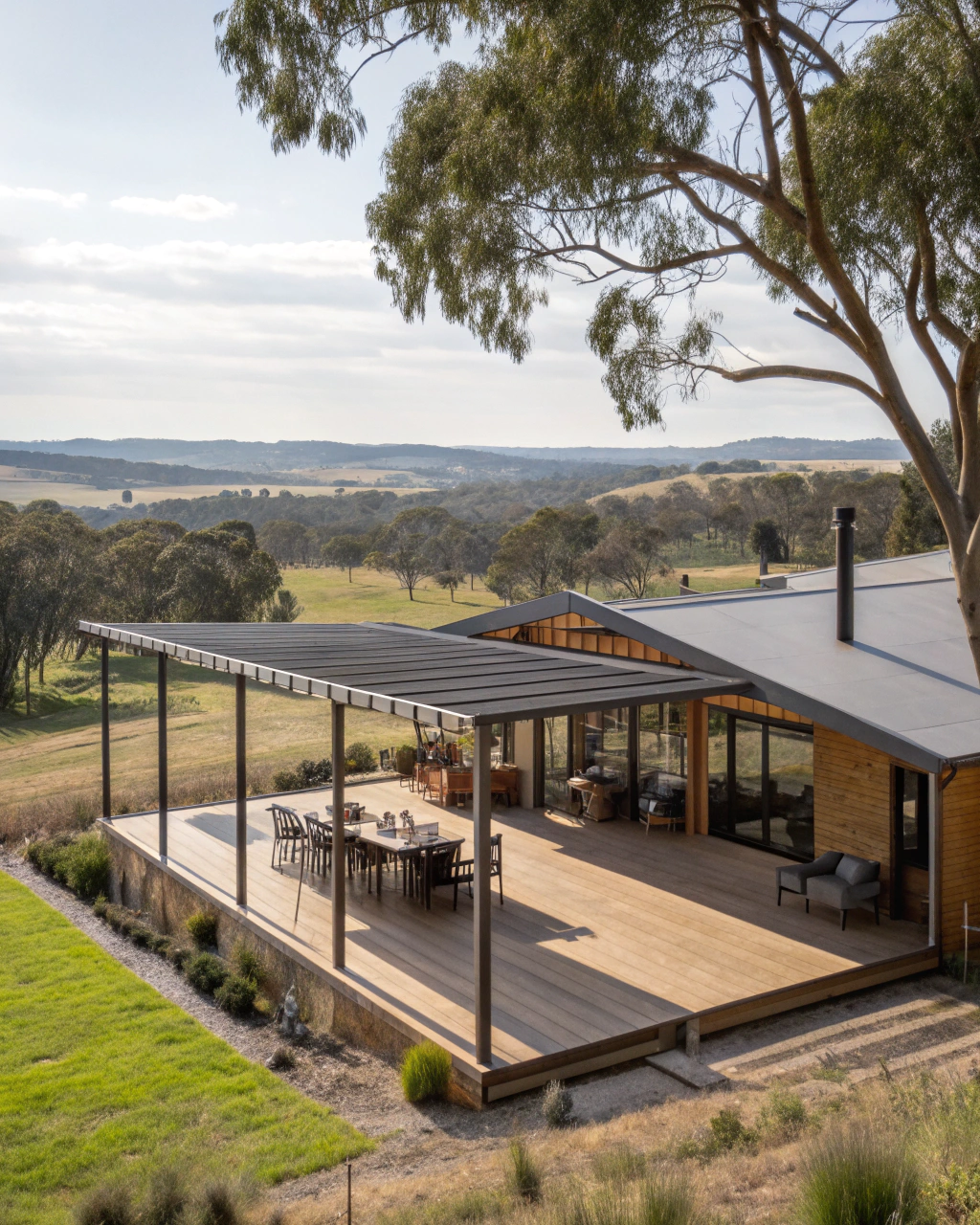
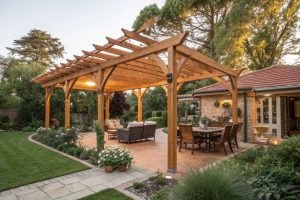
A pergola on a Somersby acreage block occupies a different design brief entirely from its suburban counterpart. Where a typical residential structure might cover thirty to forty square metres, rural lifestyle properties regularly call for entertaining pavilions of eighty to one hundred and fifty square metres — structures large enough to host extended family gatherings, accommodate outdoor kitchens, and shelter vehicles or equipment when required.
This scale demands engineering that suburban builders rarely encounter. Beam spans of five to eight metres between posts are standard on rural builds, requiring:
- Structural steel or large-section hardwood beams engineered to span without intermediate support
- Deeper, wider concrete footings designed around site-specific soil bearing capacity
- Roofing systems rated for increased wind loading across larger unobstructed spans
- Heavier-gauge connection hardware at every post and beam junction
Integrated Rural Design
The most successful acreage pergolas are designed as permanent landscape features rather than additions. On Somersby properties, this means aligning roof pitch and post placement with existing shed structures, established trees, and natural sight lines across the property — creating an outdoor space that feels purpose-built rather than retrofitted.
Getting the structural brief right before design begins is what separates a rural pergola specialist from a suburban operator working outside their depth.
Foundation Solutions for Somersby’s Variable Terrain
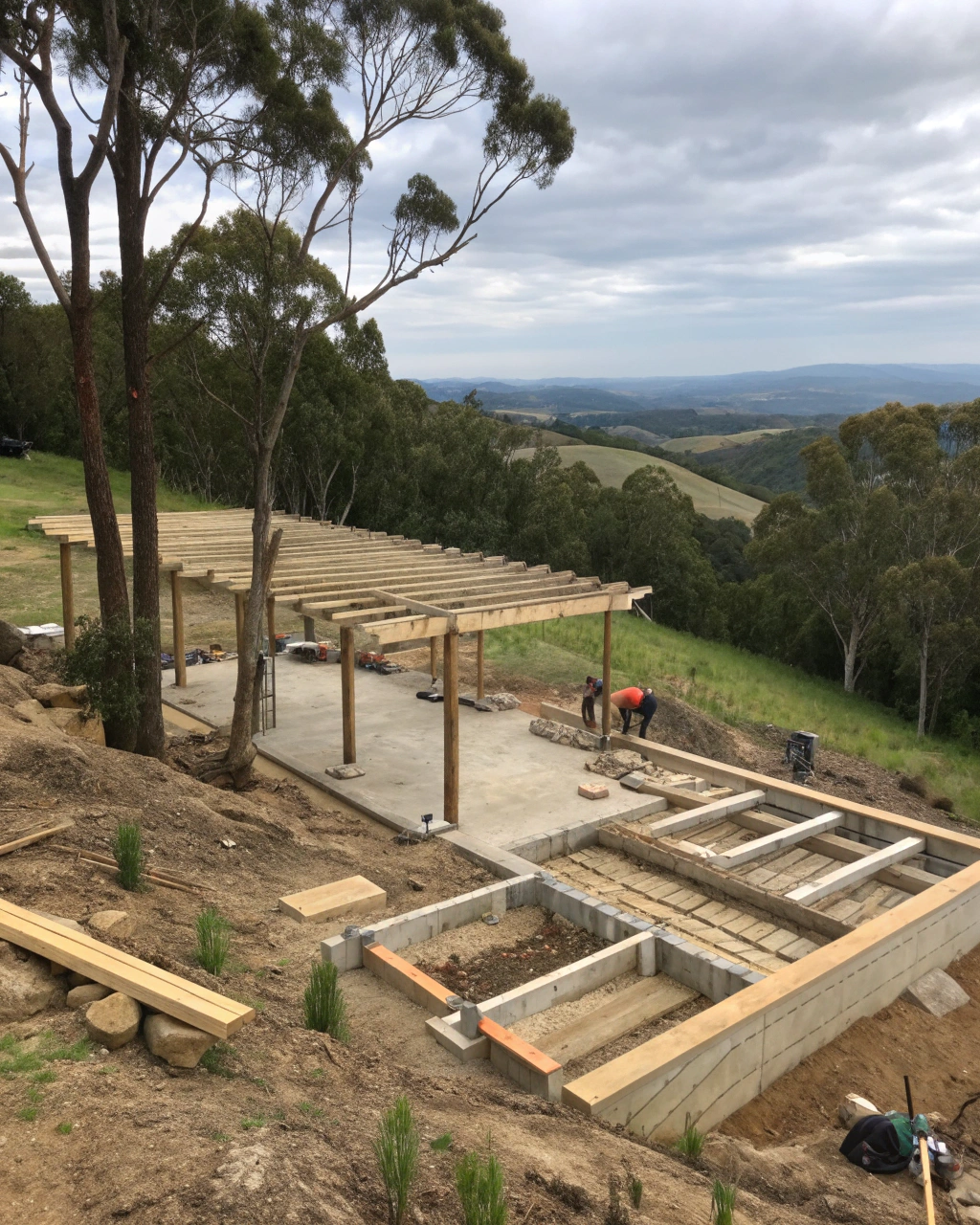
Somersby’s topography presents one of the more demanding foundation environments on the Central Coast. The locality spans from low-lying valley floor properties — where clay-heavy soils and seasonal moisture movement create reactive ground conditions — up to elevated hillside blocks where sandstone shelf and variable rock depth make standard bored pier installations unpredictable.
No two sites respond the same way, which is why a rural pergola built on the wrong footing system is one of the more expensive mistakes a property owner can make.
Valley Floor Properties
Reactive clay soils common to lower Somersby sites expand and contract with seasonal moisture changes. Footings on these blocks require increased depth and diameter, with screw piles or bored piers engineered specifically for the site’s classification — typically M or H class.
Hillside & Elevated Blocks
Sloping blocks introduce both design opportunity and structural complexity. Stepped or suspended floor systems allow pergolas to be built across significant grade changes, while rock anchoring techniques address shallow soil over a sandstone shelf.
A site inspection and soil assessment before any design work begins is standard practice on rural builds — not an optional extra.
Large-Scale Outdoor Entertaining Areas for Rural Lifestyle Blocks
The lifestyle acreage market that defines much of Somersby’s residential character has a distinct approach to outdoor entertaining. These are properties where Christmas gatherings regularly exceed thirty people, where the distance from neighbours removes any noise consideration, and where the outdoor entertaining area is expected to function as a centrepiece of the property — not an afterthought attached to the back of the house.
Designing at this scale opens up possibilities unavailable on suburban blocks:
- Freestanding pavilion structures positioned to capture views across the property or toward the ridgeline
- Dual-zone layouts separating the cooking and preparation area from the main dining and lounge space
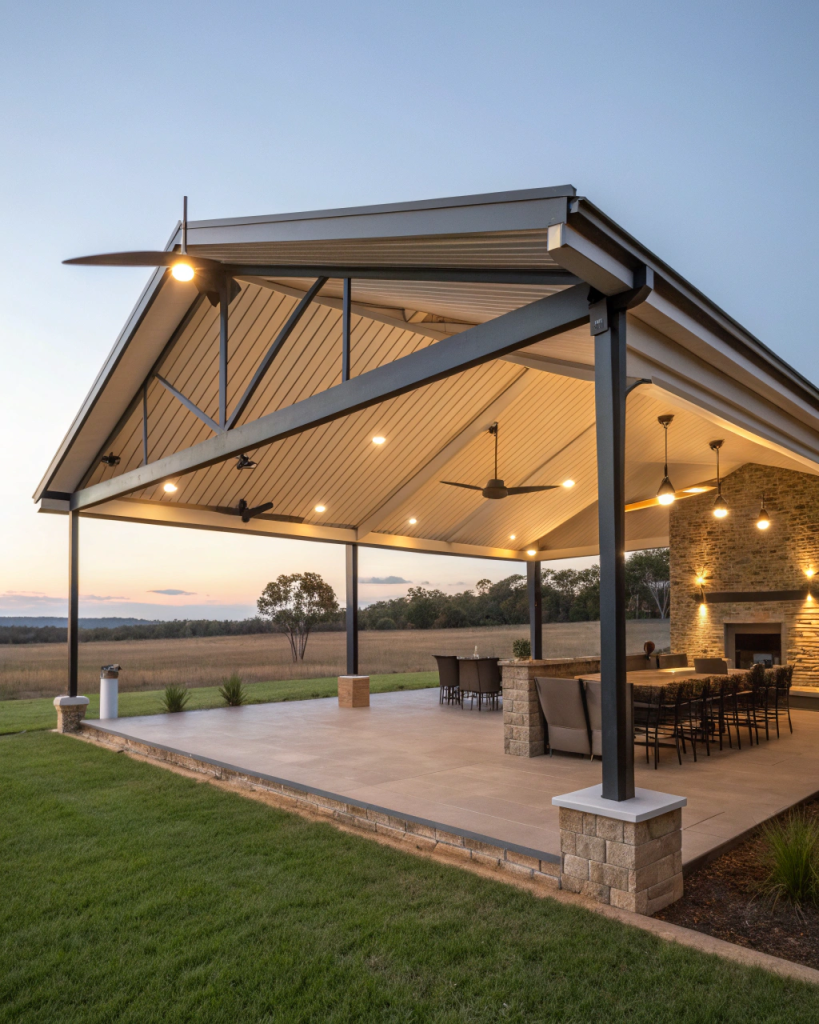
- Integrated shade and weather protection using motorised louvre roofing systems that adapt to Somersby’s variable afternoon conditions.
- Ceiling fan and lighting infrastructure across larger spans for evening entertaining year-round
- Connectivity to existing shed or stable infrastructure for properties where the entertaining area serves multiple purposes
Designing for the Rural Setting
Scale alone doesn’t define a successful rural entertaining area — orientation does. Somersby’s prevailing north-easterly breezes and afternoon westerly sun exposure require deliberate roof and screen placement to create a genuinely comfortable outdoor room across all seasons.
Why Somersby Acreage Owners Choose a Rural Property Specialist
A suburban pergola builder operating on a rural property for the first time encounters problems they haven’t priced, haven’t engineered for, and haven’t built their business around solving. The result is almost always delays, variations, or structural compromises that a specialist would have anticipated before the project began.
Somersby acreage owners consistently identify the same decision factors when choosing a builder for a large-scale outdoor structure:
- Site familiarity — understanding how Central Coast rural properties behave across seasons, soil types, and slope conditions
- BAL assessment experience — knowing which materials meet bushfire attack level requirements without over-engineering the budget
- Council DA knowledge — navigating Central Coast Council’s rural zone requirements for structures exceeding exempt development thresholds
- Equipment capability — arriving with machinery suited to long driveway access, soft ground conditions, and elevated or sloped installation sites
- Rural-scale engineering — working with structural engineers experienced in spans, loads, and footing designs specific to large footprint structures.
The Right Brief From the Start
Getting the scope, engineering, and council pathway confirmed before design begins is what protects the budget and the timeline on a rural pergola project.
Frequently Asked Questions: Pergolas on Somersby Rural Properties
Top sights in Somersby

