

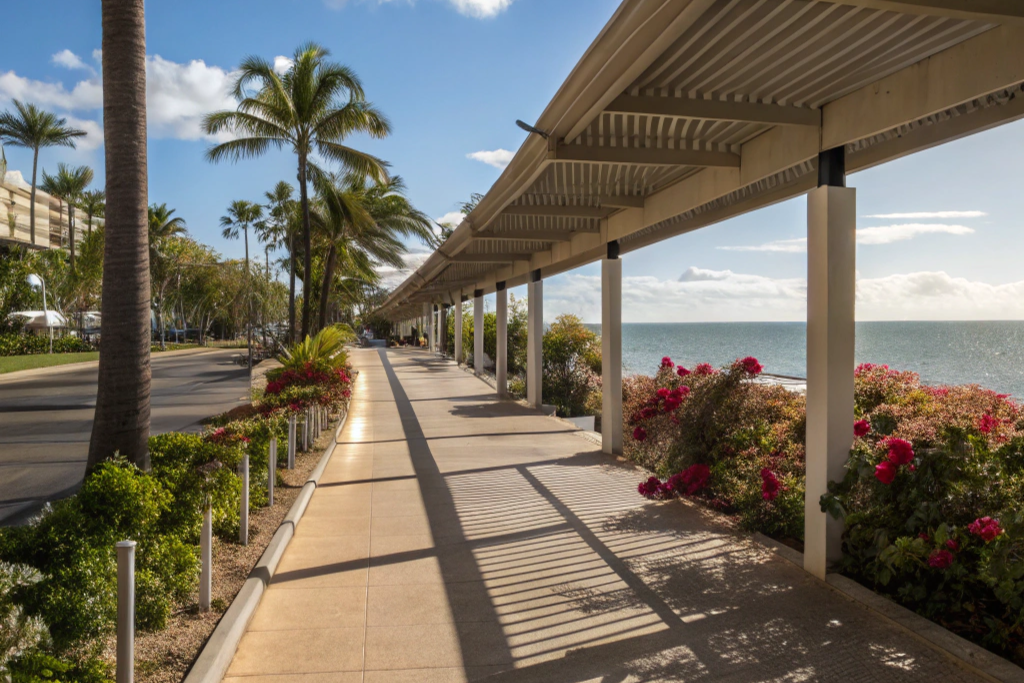
Covered walkways solve one of the most frustrating problems Central Coast homeowners deal with—getting soaked or sunburnt just moving between different areas of your property. Whether you’re carrying groceries from the garage to your house, heading out to the entertaining area, or accessing that granny flat you’ve built out back, exposed pathways mean you’re at the mercy of whatever weather the coast throws at you. One minute it’s clear, the next you’re caught in a sudden downpour or squinting against intense UV that reflects off everything around you.
We build covered walkways throughout Gosford, Terrigal, Woy Woy, Erina, and Wyong that protect you from the Central Coast’s unpredictable weather while creating proper connections between the spaces you use every day. These aren’t just basic shelters—they’re weather-resistant structures designed specifically for coastal conditions, with materials that handle salt air, construction methods that withstand strong winds, and proper drainage that keeps pathways safe during heavy rain.
What Are Covered Walkways
Covered walkways are sheltered pathways that connect different areas of your property with overhead protection from weather elements. These structures create functional corridors between your house and garage, outdoor entertaining spaces, separate buildings, or any zones you move between regularly. They can be attached directly to existing structures, built as freestanding features, or designed as hybrid installations that combine both approaches depending on your property layout and specific needs.
The key feature is the roof system that provides continuous weather protection along the entire pathway. This overhead coverage keeps you dry during rain, shaded from harsh sun, and protected from wind-blown debris while maintaining open access along the sides for natural airflow and easy entry from multiple points.
Benefits of Covered Walkways
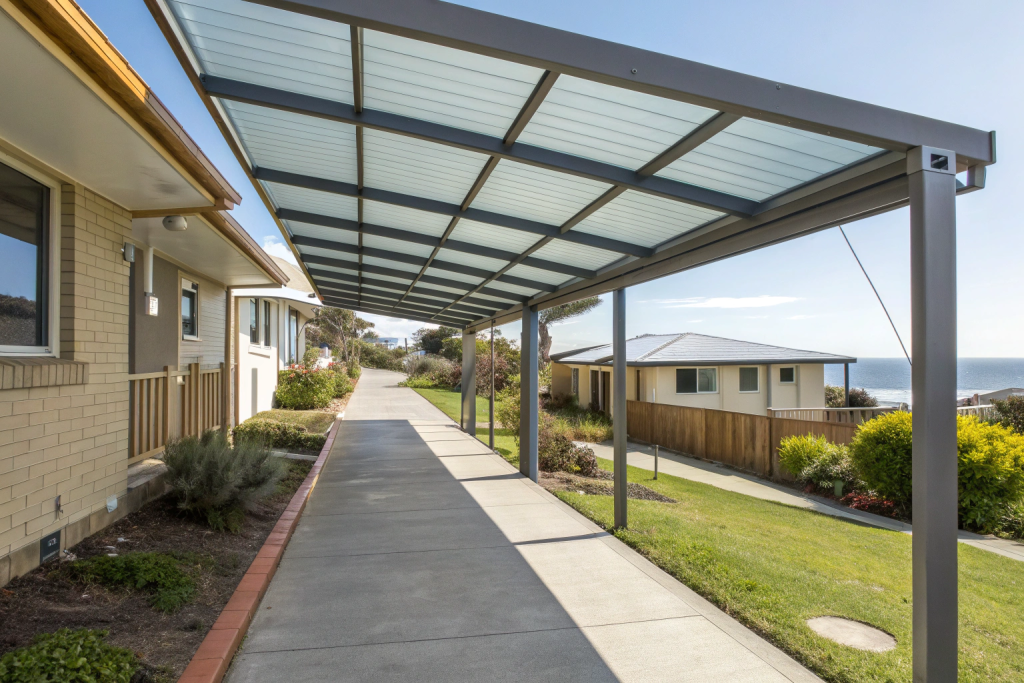
Covered walkways solve the daily frustration of getting soaked or sunburnt just moving between different areas of your property. You’re making these trips multiple times every day—from house to garage with groceries, out to the entertaining area, across to that separate building. Weather protection means you’re doing all of this comfortably regardless of what’s happening overhead, and you’re not tracking water and dirt through your home every time it rains.
Key advantages you’ll notice immediately:
- Dry passage during the Central Coast’s unpredictable rain showers
- Protection from intense UV exposure between buildings
- Reduced cleaning from tracked-in moisture and debris
- Safe walking surfaces that don’t become slip hazards when wet
- Year-round access to outdoor spaces you’d otherwise avoid in bad weather
- Increased property value from improved functionality and aesthetics
- Better accessibility for elderly family members or anyone with mobility considerations
The combination of weather protection and safer passage changes how you use your entire property, making outdoor areas genuinely functional throughout the year.
Design Styles Available
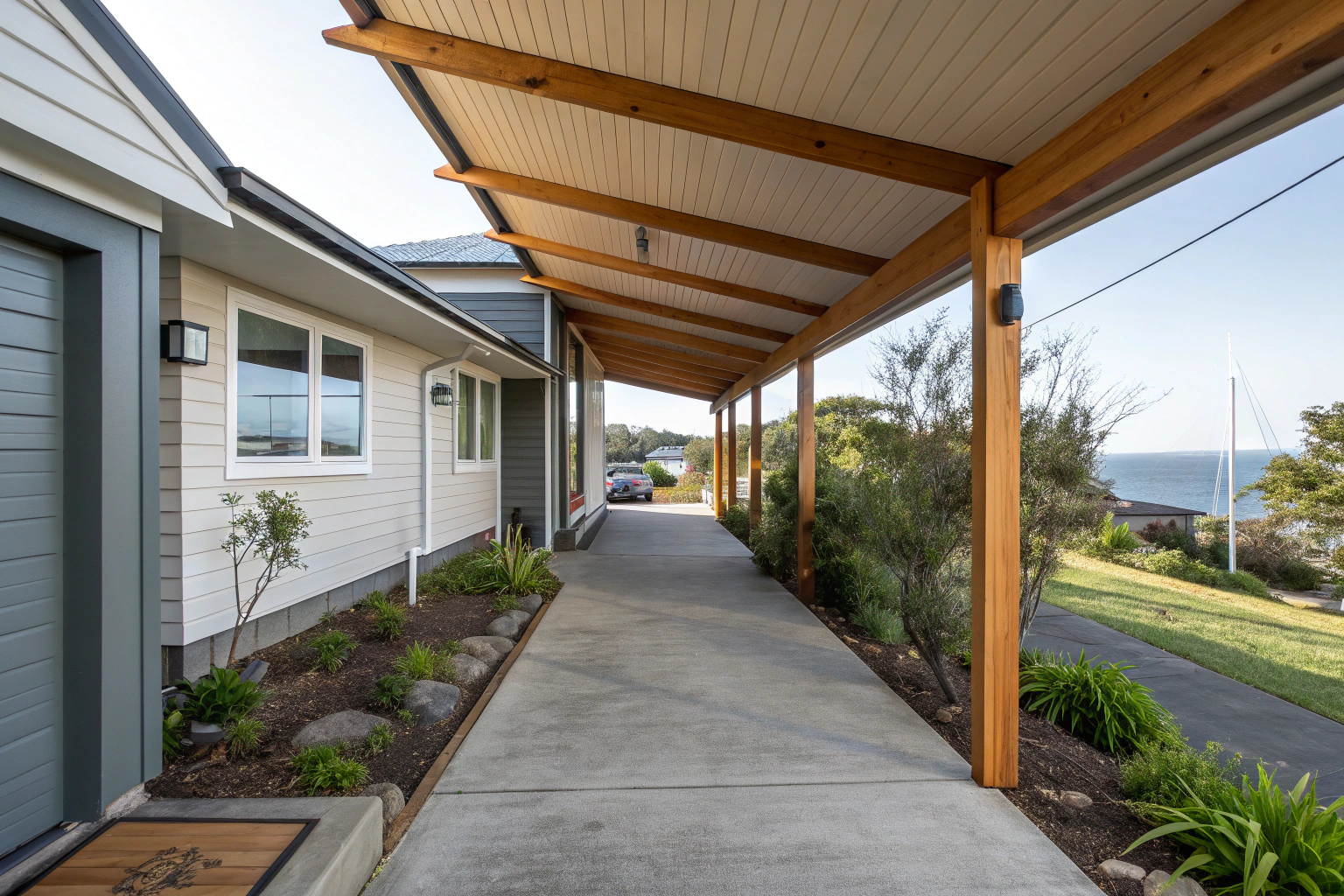
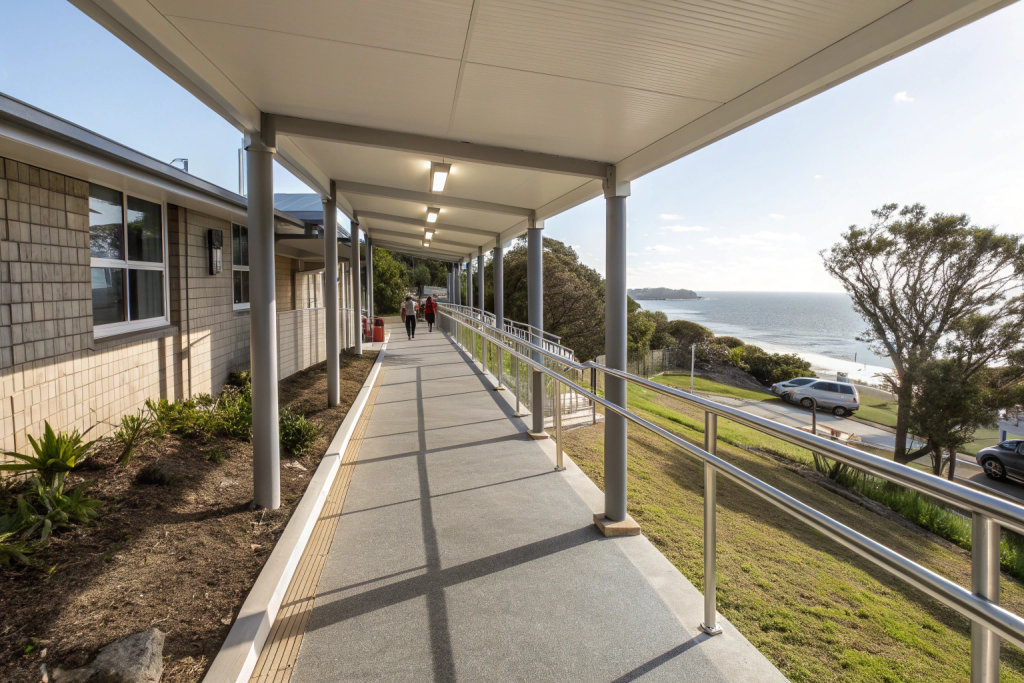
Traditional gable roofs create that classic peaked design that sheds water efficiently to both sides while providing excellent headroom. This style suits most Central Coast homes, handles heavy rainfall naturally, and complements everything from weatherboard cottages to brick veneer houses. The pitched roof gives you proper clearance throughout the pathway without that cramped corridor feeling.
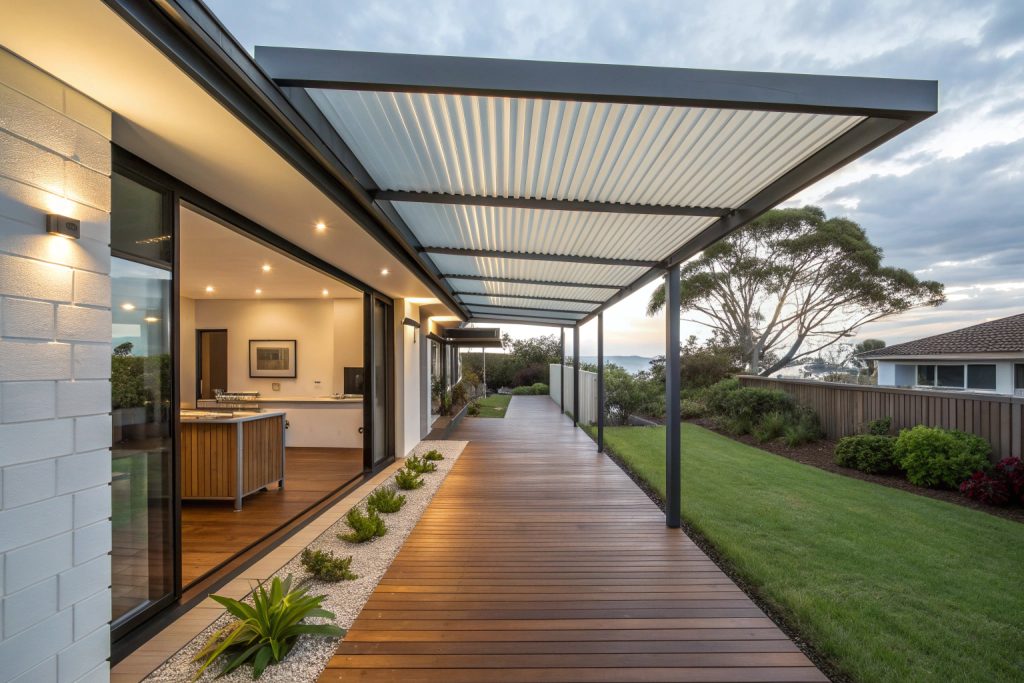
Modern flat or low-pitched designs work perfectly for contemporary homes where you want clean lines and minimal visual profile. These integrate seamlessly with modern architecture while still incorporating subtle drainage slopes that aren’t visible but channel water away effectively. Curved or arched designs suit properties where the pathway follows a curved route or where you want distinctive architectural appeal that stands out.
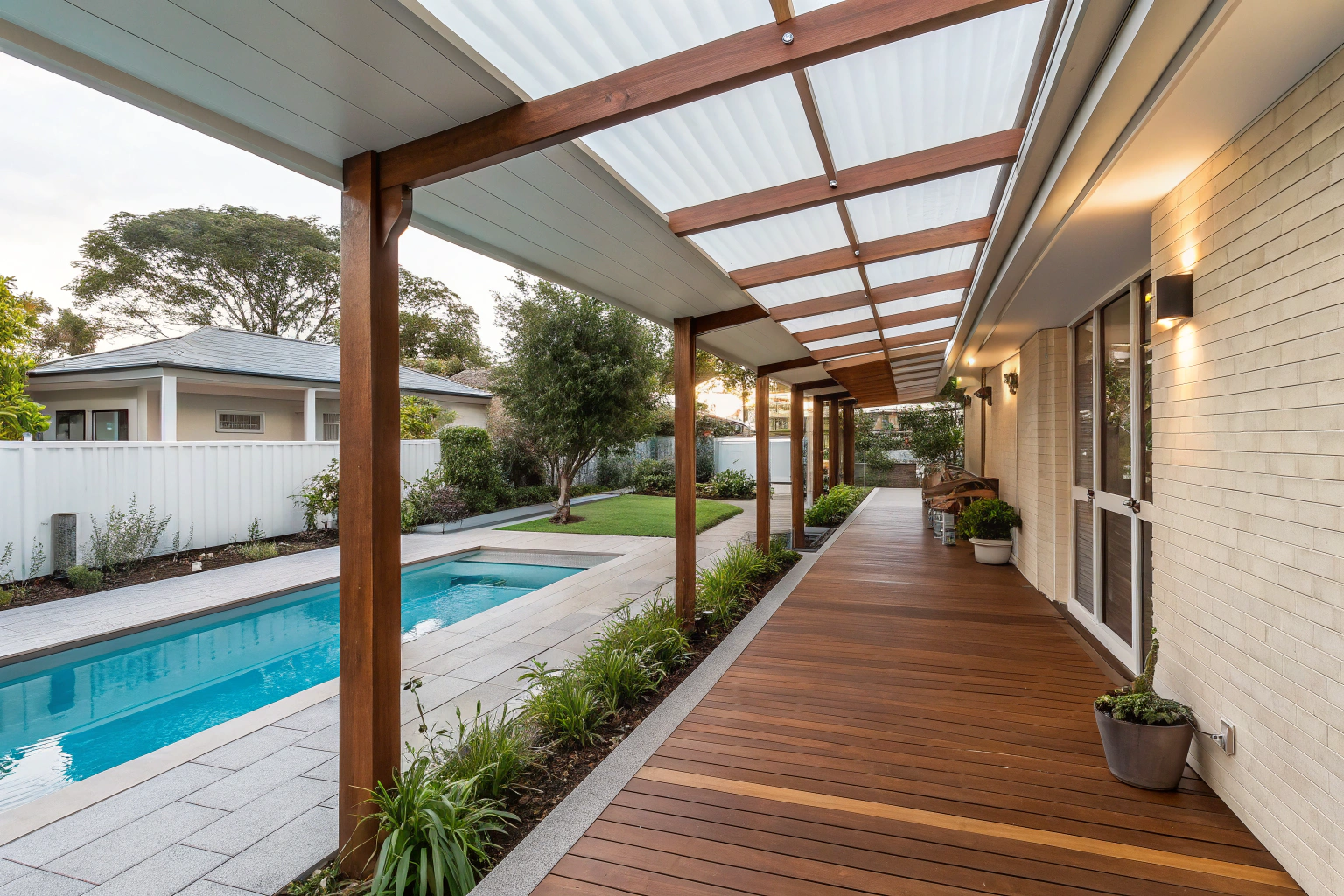
Most walkways feature open sides for natural airflow while maintaining overhead protection—this prevents that enclosed tunnel feeling and lets coastal breezes flow through. When you need extra protection, partial screening with louvres or lattice adds wind breaks or privacy without fully enclosing the space, and glazed polycarbonate roofing provides weather protection while allowing natural light penetration for brighter pathways.
Flooring & Surface Choices
Concrete pathways provide the most durable, low-maintenance surface option. Properly finished concrete with broom finishes or exposed aggregate gives you excellent traction in wet conditions, handles high traffic without deteriorating, and can be colored or stamped for aesthetic appeal. Concrete resists weathering and creates permanent surfaces that last for decades with minimal upkeep.
Paver installations offer design flexibility with various colours, patterns, and textures that complement most landscape styles. They provide natural drainage between joints, can be replaced individually if damaged, and create visually appealing pathways. Timber decking suits elevated walkways or extensions of existing deck areas, providing warm, comfortable walking surfaces—treated hardwood or composite decking withstands weather exposure while maintaining appearance.
Whatever material you choose, non-slip characteristics matter more than aesthetics. Textured finishes, grooved surfaces, or inherently slip-resistant materials prevent accidents during wet weather. Avoid smooth concrete or any surface that becomes hazardous when wet. Proper drainage integration with surface falls toward edges or permeable materials prevents water pooling during heavy rain.
Material Options
Steel frame construction provides maximum strength for longer spans or walkways supporting heavier roofing materials. Properly treated and painted steel handles Central Coast conditions well, resists termites completely, and allows for precise engineering of complex designs. Timber posts and beams create warmth and natural aesthetic appeal that suits traditional homes—treated hardwood can be stained or painted to match existing structures, providing that classic Australian verandah look.
Aluminium framing offers excellent corrosion resistance with minimal maintenance requirements, particularly suited to coastal locations where salt air accelerates deterioration of other materials. Powder-coated aluminium comes in various colours and maintains its appearance without the painting schedule timber requires. Colorbond roofing provides durable, weatherproof coverage in colours matching your home’s existing roof—the material reflects heat, handles high winds, and resists salt air corrosion.
Polycarbonate panels allow natural light penetration while blocking UV and providing full rain protection. These panels create brighter walkways than solid roofing. All materials receive coastal-resistant finishes—marine-grade treatments and corrosion-resistant coatings designed specifically for salt air exposure.
Central Coast Considerations
Central Coast UV levels hit extreme ratings regularly during summer months, so covered walkways need roofing materials that block UV penetration while managing heat buildup underneath. Weather changes fast on the coast—effective designs include proper roof pitch and guttering that handles sudden heavy downpours without overflow, accounting for wind-driven rain that comes in at angles during northeasterly storms.
Exposed walkways face significant wind loads requiring appropriate bracing, secure connection points to existing structures, and engineered footings that prevent movement during high winds. Every material used faces constant salt air exposure—fasteners, connections, roofing, and framing all need corrosion-resistant specifications. Using standard materials that work fine inland results in rust and deterioration within a few years.
Proper drainage prevents water pooling even in covered areas. Gutters must discharge away from pathways, surfaces need appropriate fall, and connection points between the roof and existing structures require proper flashing. Coastal humidity means pathway surfaces can become slippery, so non-slip treatments or textured finishes prevent accidents.

Investment Value
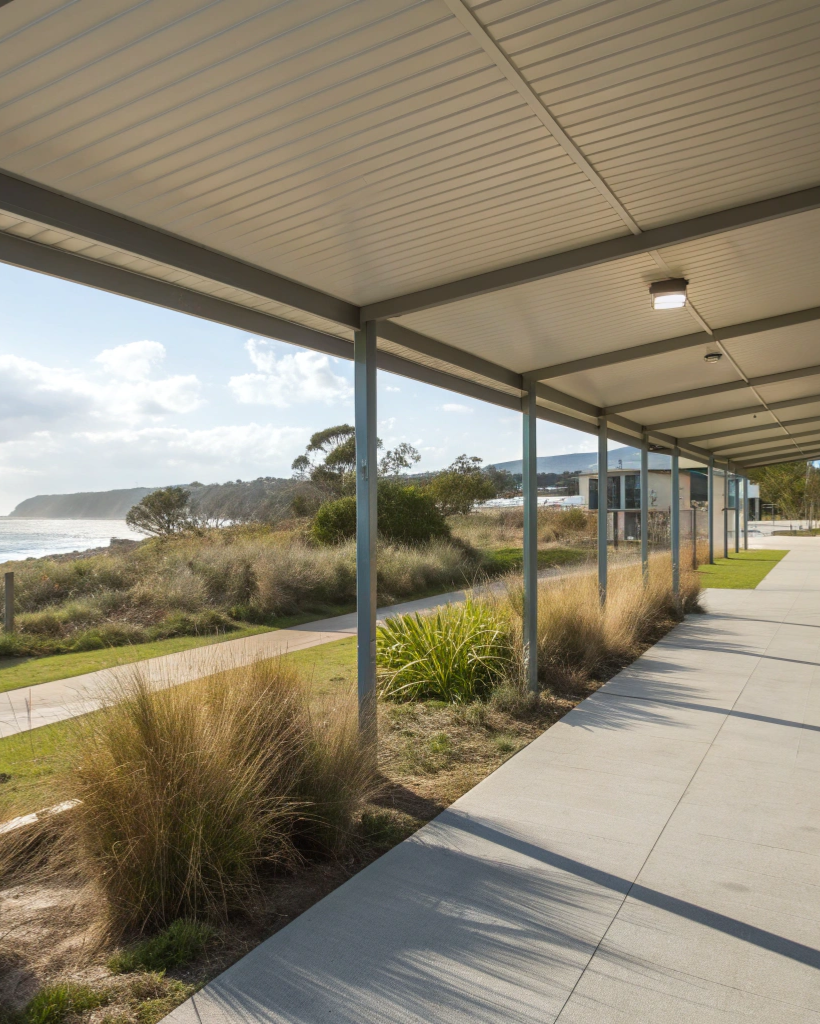
A covered walkway needs to look like it belongs on your property, not like an afterthought bolted on years later. We match the design to your home’s existing architectural style—traditional gable roofs for classic homes, clean flat designs for modern builds, or custom profiles that complement your property’s unique character. Colour coordination matters just as much as structural design, with roofing, posts, and screening matching or intentionally contrasting with your home’s existing scheme. Colorbond comes in a full range that likely includes your current roof colour, while timber can be stained to complement existing decking or trim work.
The walkway should enhance your landscape design by working around established gardens, preserving mature trees, and creating transitions that flow naturally from hardscaped areas to garden beds. For properties with multiple outdoor living zones, covered walkways create connections that make those spaces function together as one cohesive outdoor living environment that’s actually usable in all weather.
Frequently Asked Questions

Let’s Talk
Pergolas Central Coast Specialist is an organisation that provides high-quality pergolas and outdoor living structures. Our company has been in business for years, and we offer a wide range of services, including Custom Project and New Construction Services. If you’re interested in learning more about what this company can do for you, contact them today.
