
Expert Deck Builder Serving Central Coast
Got a backyard that slopes down toward the water view you paid good money for? You’re not alone. Half the properties from Terrigal to Woy Woy sit on hillsides that most builders just shrug at. But here’s what we’ve learned after building decks across Gosford, Erina, and Wyong for years – that slope isn’t a problem, it’s actually your biggest opportunity. Multi-level decks turn what looks like a challenge into something way better than a flat block ever could.
You get separate zones without walls, entertainment spaces that flow naturally, and you save yourself the cost of massive retaining walls. We’ve built these tiered outdoor spaces on everything from gentle Terrigal slopes to steep drops in the Gosford hills, and what homeowners tell us afterward is always the same – they can’t believe how much usable space they actually had all along.
What Are Multi-level Decks
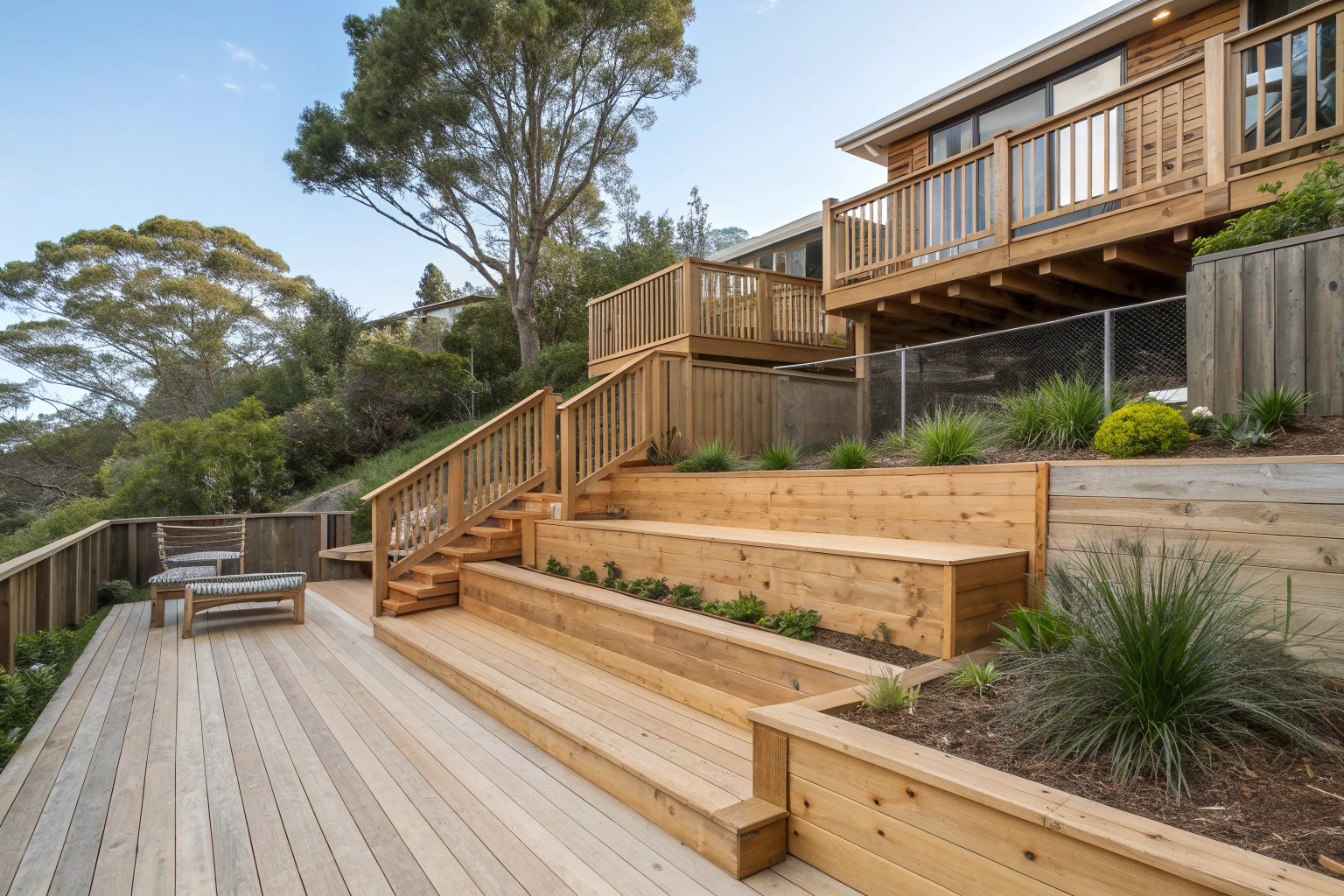
Multi-level decks are outdoor platforms built at two or more distinct heights, connected by stairs or stepped transitions. Instead of fighting your property’s natural slope with one massive elevated deck or expensive retaining walls, these tiered systems work with the land. Each level creates its own defined space while staying connected to the whole outdoor area. Think of it like outdoor rooms at different heights – your top deck might be level with your back door for easy kitchen access, while the lower tier sits closer to the pool or garden. The levels get joined by built-in stairs that become part of the design, not just an afterthought. Properties across the Central Coast – especially those hillside homes in Terrigal and Avoca – are perfect candidates because the natural grade does half the design work already.

Key Advantages of Multi-level Decks
Maximized Usable Space
Sloped sites that would otherwise need expensive retaining walls or stay as unusable hillside become fully functional outdoor living areas. Each tier captures space at its natural height, turning your entire backyard into zones you’ll actually use. The stepped design means you’re building with your property’s topography instead of fighting it with massive structural work.
Natural Functional Zoning
Height changes create automatic separation between different activities – no need for screens or dividers when the level change does it for you. Your BBQ area sits naturally apart from the lounging zone, kids’ play space separates from adult entertaining, and pool access doesn’t interfere with dry dining areas. The zones feel connected but distinct.
Architectural Dimension
Flat decks disappear into the background – tiered levels create visual interest that makes your outdoor space memorable. The stepped profile adds depth and character to your property’s appearance from both inside the house and from the street or neighboring properties. Multi-level construction turns standard outdoor areas into something that looks custom-designed for your exact site.
Cost-Effective Site Solutions
Building multiple smaller platforms at varying heights typically costs less than the retaining walls and earthwork needed to create one massive level surface. You’re working with the natural grade instead of fighting it, which reduces material needs and construction time. Foundation work happens at multiple depths suited to each level rather than extensive excavation to one uniform height.
Multiple Entertaining Areas
When you’ve got 15 people over, everyone doesn’t have to crowd one space – the upper level handles dinner service while the lower tier becomes the drinks and conversation zone. Different groups naturally spread across levels based on activity and preference. Kids gravitate to one tier while adults occupy another, all staying connected through the open stepped design.
Enhanced Property Appeal
Multi-level decks signal quality construction and thoughtful design – they’re not the standard builder-grade single platform most properties get. The tiered approach shows you’ve invested in maximizing your property’s potential rather than taking the easiest path. Real estate appeal goes up because buyers recognize the extra functionality and design consideration that went into the outdoor space.

Tiered Platform Systems
Each level sits at its own height, following your property’s natural contours rather than fighting against them. The platforms connect through integrated stairways that feel like part of the deck, not tacked on afterward. Most Central Coast builds use two or three tiers, though we’ve done more for properties with significant elevation changes heading toward water views.
Connected Outdoor Zones
The magic happens in how the levels relate to each other – upper decks typically connect to your main living areas, while lower tiers reach toward pools, gardens, or that view you’re trying to capture. Stairs between levels create natural traffic flow and let you move through the space without everything feeling like one big platform. Each zone gets its own purpose while staying part of the complete outdoor area.
Natural Slope Solutions
Instead of massive retaining walls or excessive excavation, multi-level decks step down with your land. This approach costs less than trying to flatten everything and looks way more natural in Central Coast’s coastal topography. Your deck works with the hillside, not against it, which saves money and creates better outdoor spaces at the same time.
Ideal for Central Coast Properties
The Central Coast’s topography practically demands multi-level decking – you’ve got hillside properties from Copacabana down through Terrigal, coastal homes with elevation toward water views, and valley-facing backyards that drop away from the house. Most of these sites come with natural slopes that make single-level decks either impossibly expensive or just impractical. When you build tiered platforms instead, you’re using what’s already there rather than trying to flatten or elevate everything to one height. This matters because coastal properties often purchased for their views sit on the exact kind of terrain that benefits from stepped construction. The geology here means you’re usually looking at moderate slopes perfect for two or three levels, not the extreme drops that need different solutions. Neighborhoods around Gosford, Erina, and Wyong especially see these conditions – enough grade to make flat construction difficult, not so much that you’re building straight up a cliff. Multi-level design has become standard for quality outdoor construction in the area because it matches how Central Coast land actually behaves.

Enhancement Features for Multi-level Decks
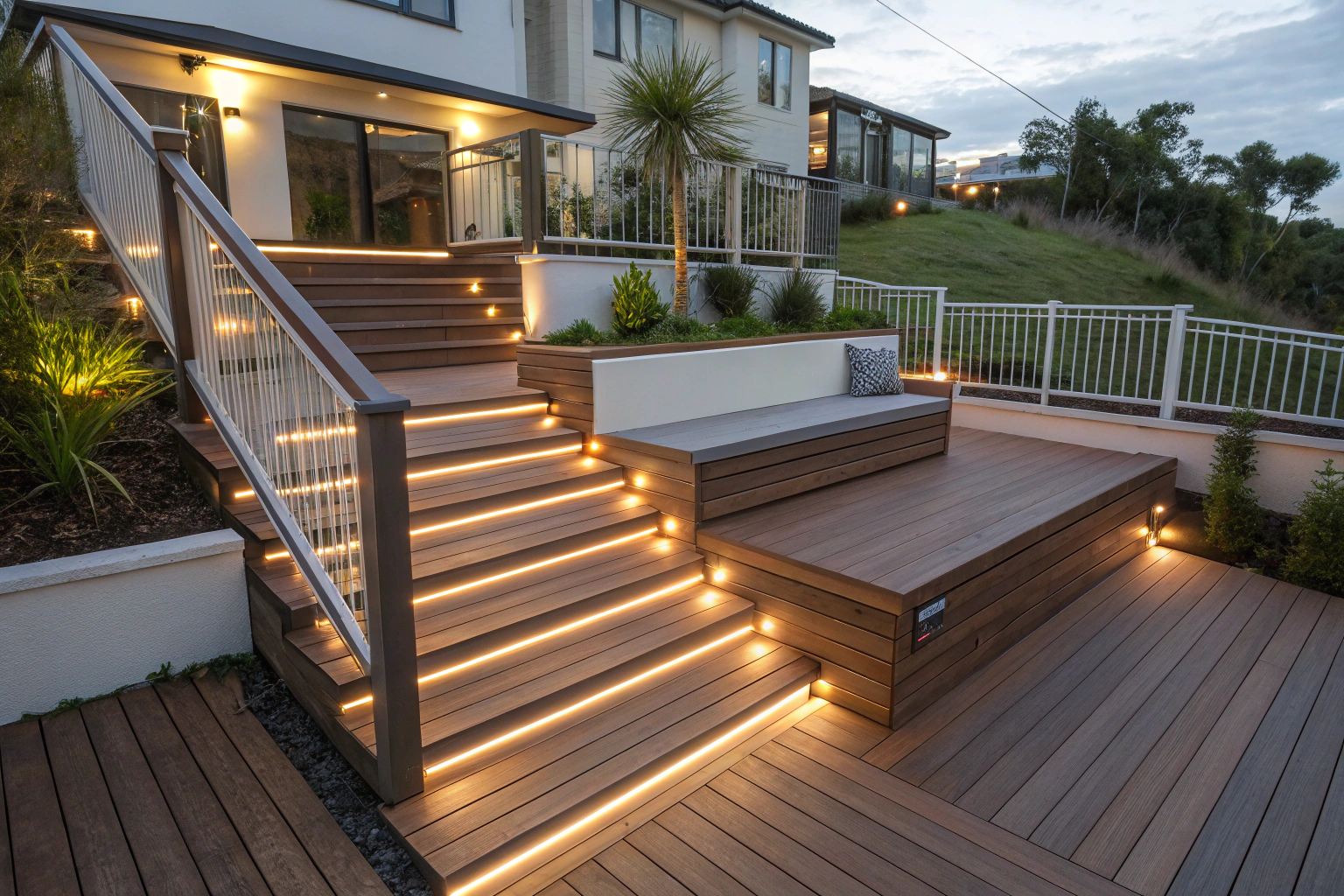
Once you’ve got the basic tier structure sorted, the enhancements make multi-level decks feel finished and add functionality beyond just the platforms and stairs. Built-in seating along level changes creates casual gathering spots without needing to buy and arrange outdoor furniture – the steps between tiers can incorporate bench seats that define edges and provide extra capacity during larger gatherings. Planter boxes between levels soften the transitions and add greenery at eye level from lower tiers, creating natural dividers that don’t block views or airflow.
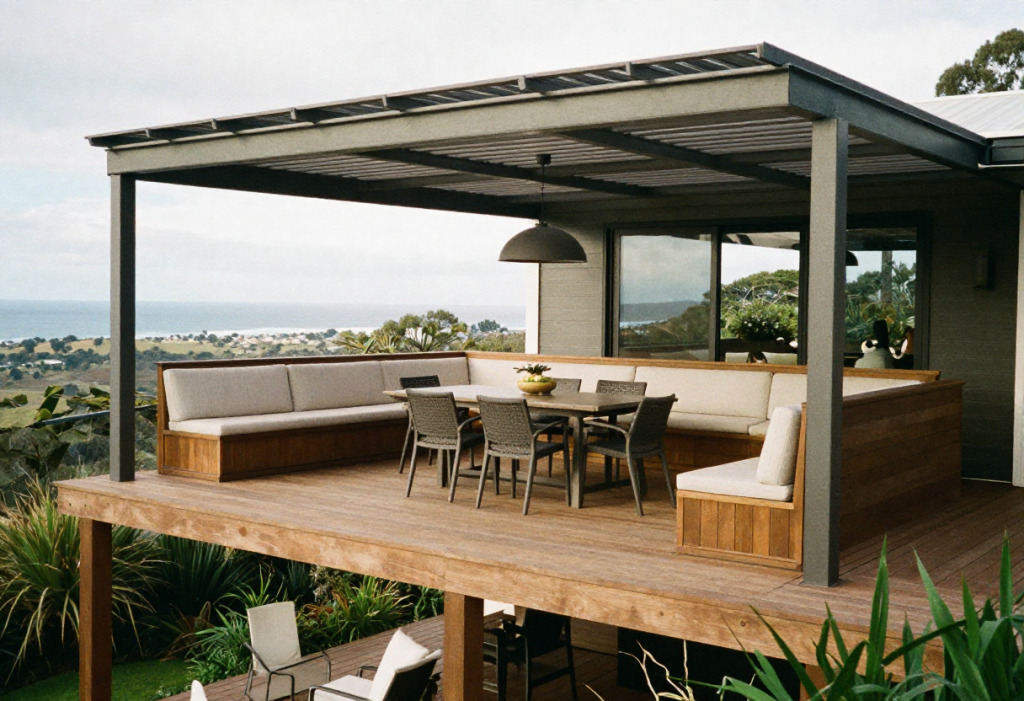
Pergola coverage on upper levels extends usable hours and weather protection – most people put the main entertaining tier under cover while leaving lower sun decks open. Lighting transforms how you use the space after dark, with different tiers getting different lighting treatments based on function. Deck lighting, stair edge lights, and feature uplighting on support posts create layers that make evening entertaining safe and atmospheric. Privacy screening between areas works better on multi-level decks because you can position screens to block specific sight lines without enclosing entire platforms. Outdoor kitchens fit naturally on middle tiers where they’re accessible from dining areas but separate from the main congregation zones. Fire pits or outdoor heaters on lower levels create focal points for cooler evenings without smoke affecting dining areas above.
