

Got a sloping block on the Central Coast that’s just sitting there, not being used? You’re looking at some of the best real estate around here – ocean glimpses, valley views, bush outlooks – but the terrain’s making it hard to enjoy what you’ve got. That’s where elevated decks come in, and they’re honestly one of the smartest ways to turn a challenging site into your favourite spot on the property.
We’ve been building elevated decks across Gosford, Terrigal, Woy Woy, Erina, and Wyong for years now, and the difference they make is something else. Instead of fighting against the slope with expensive excavation and retaining walls, you’re working with it – creating a raised platform that captures those views, catches the coastal breeze, and gives you usable outdoor space where there wasn’t any before. And underneath? That’s not wasted space either. Plenty of our clients use it for storage, covered parking, or even a sheltered entertaining area.
The thing about elevated decks on the Central Coast is they need proper engineering and construction. We’re talking posts that go deep into the ground, structural certification, wind load calculations – the works. But when it’s done right, you’ve got a deck that’s safe, solid, and adds real value to your property. Whether you’re 1.5 meters off the ground or 3 meters up, we handle the technical side so you can focus on enjoying the result. Because at the end of the day, that’s what this is about – making your property work better for how you actually want to live.
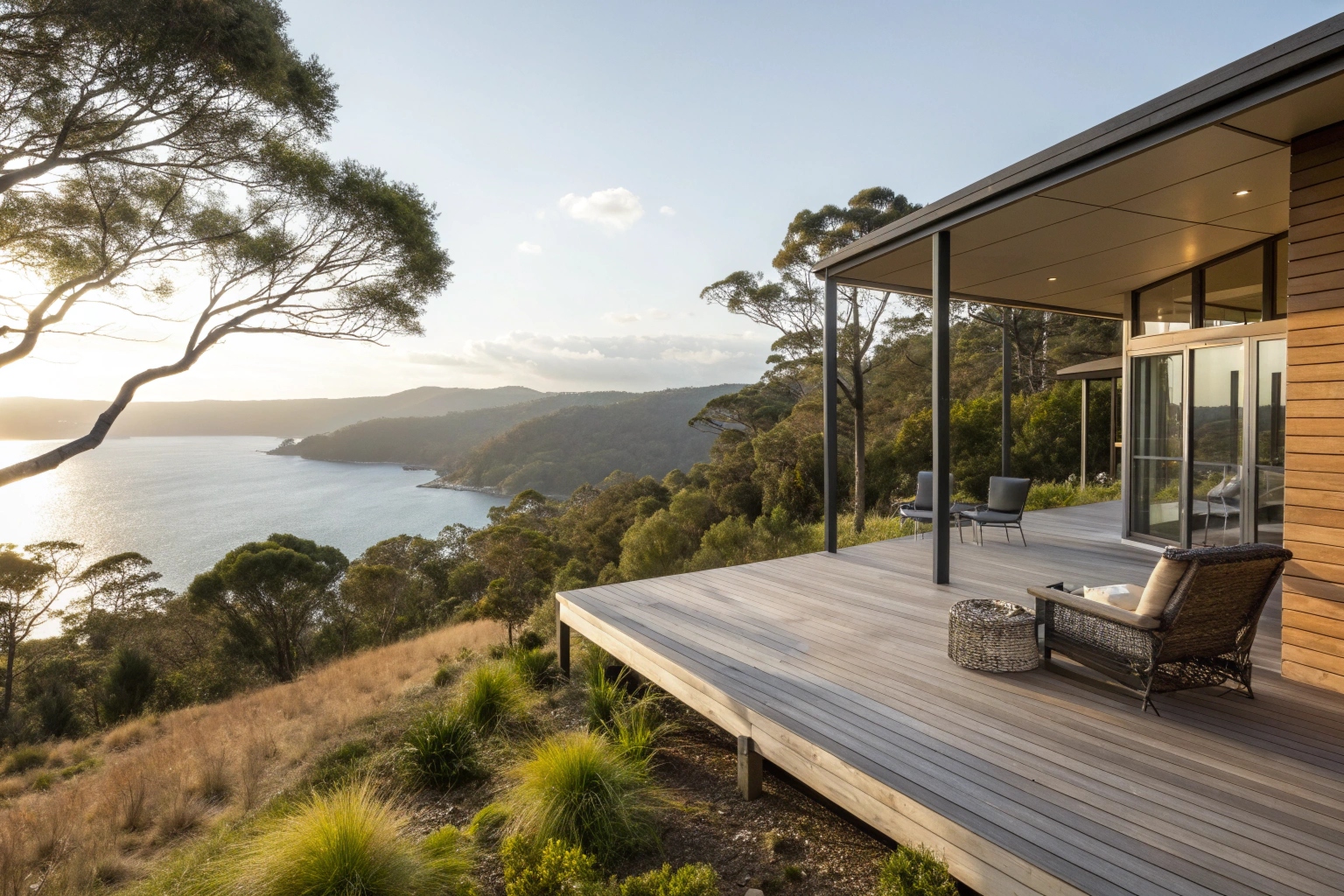
What Makes Elevated Decks Different
Elevated decks aren’t your standard ground-level deck. These are raised platforms built on posts or piers, typically sitting 1.5 meters or higher off the ground – sometimes a lot higher depending on your site. They’re either attached to your home or built as freestanding structures, and the whole point is creating outdoor living space where the terrain would normally make that impossible.
On the Central Coast, we see them most often on hillside properties where the backyard slopes away from the house. Instead of looking at an unusable hill, you’re building outward and upward, creating a level entertaining area that makes the most of your elevation. Some of the elevated decks we’ve built are 2-3 meters up, giving our clients views they couldn’t see from ground level – ocean glimpses, valley outlooks, bushland panoramas.
The advantages stack up pretty quick:
- You’re maximising those spectacular Central Coast views that you bought the property for in the first place
- Sloping sites become functional instead of frustrating
- You catch the coastal breeze better at height, which is gold on warm days
- The space underneath isn’t wasted – storage, parking, workshops, sheltered areas
- You avoid the massive cost of excavation and retaining walls
- It adds serious outdoor living area to your home
- The architectural impact is striking, makes a real statement
For properties between Gosford and Wyong, especially in areas like Terrigal where hillside blocks are common, elevated decks solve problems while creating something you’ll actually use year-round.
Engineering & Safety – Getting It Right From The Start
Here’s where elevated decks separate from standard ground-level builds – you need structural engineering certification, and there’s no way around it. When you’re building a platform several meters off the ground, council wants proof it’s been properly designed and calculated. We work with structural engineers on every elevated deck project, making sure the design meets all the requirements before we even dig the first hole.
The engineering covers everything:
- Post and beam construction that’s rated for the loads
- Deep engineered footings that won’t move or settle
- Wind load calculations for your specific height and location
- Lateral bracing systems for stability
- Balustrade design meeting minimum 1-meter height requirements
- Connection points between deck and house (if attached)
On the Central Coast, wind exposure is a real consideration, especially if you’re elevated and coastal. The calculations account for that, making sure your deck handles the conditions it’ll actually face. The footings go deeper than you’d expect – sometimes 600mm to 800mm or more – because they’re carrying significant weight and dealing with potential wind uplift.
Safety features aren’t optional either. Balustrades need to meet specific spacing requirements so nothing can fall through. Stairways need proper handrails, non-slip treads, and landing platforms if they’re long runs. If you’ve got young kids, gates at the top of stairs are usually a good call.
The whole process – engineering, council approval, construction – typically runs 4-6 weeks for most elevated deck projects. Longer if it’s complex or we’re waiting on approvals, but that’s the realistic timeline.
Design Considerations That Actually Matter
When we’re planning an elevated deck, orientation makes a huge difference. You want to capture the best views, sure, but you also need to think about where the sun hits at different times of day. A deck that’s full western exposure might give you amazing sunset views, but it’ll be brutal in summer afternoons. Sometimes we’ll angle the deck slightly or plan for shade structures to balance things out.
Wind exposure at height is another one. The breeze that feels refreshing at 1.5 meters can be pretty strong at 3 meters up. We look at prevailing wind directions and consider whether you need screening or protection on certain sides. Glass balustrade panels work well for this – you keep the views but cut the wind.
Privacy changes when you’re elevated too. You might be looking over your neighbour’s fence now, or they might be able to see onto your deck from their upper floor. We plan for privacy screens or strategic plantings where needed, keeping your outdoor space comfortable.
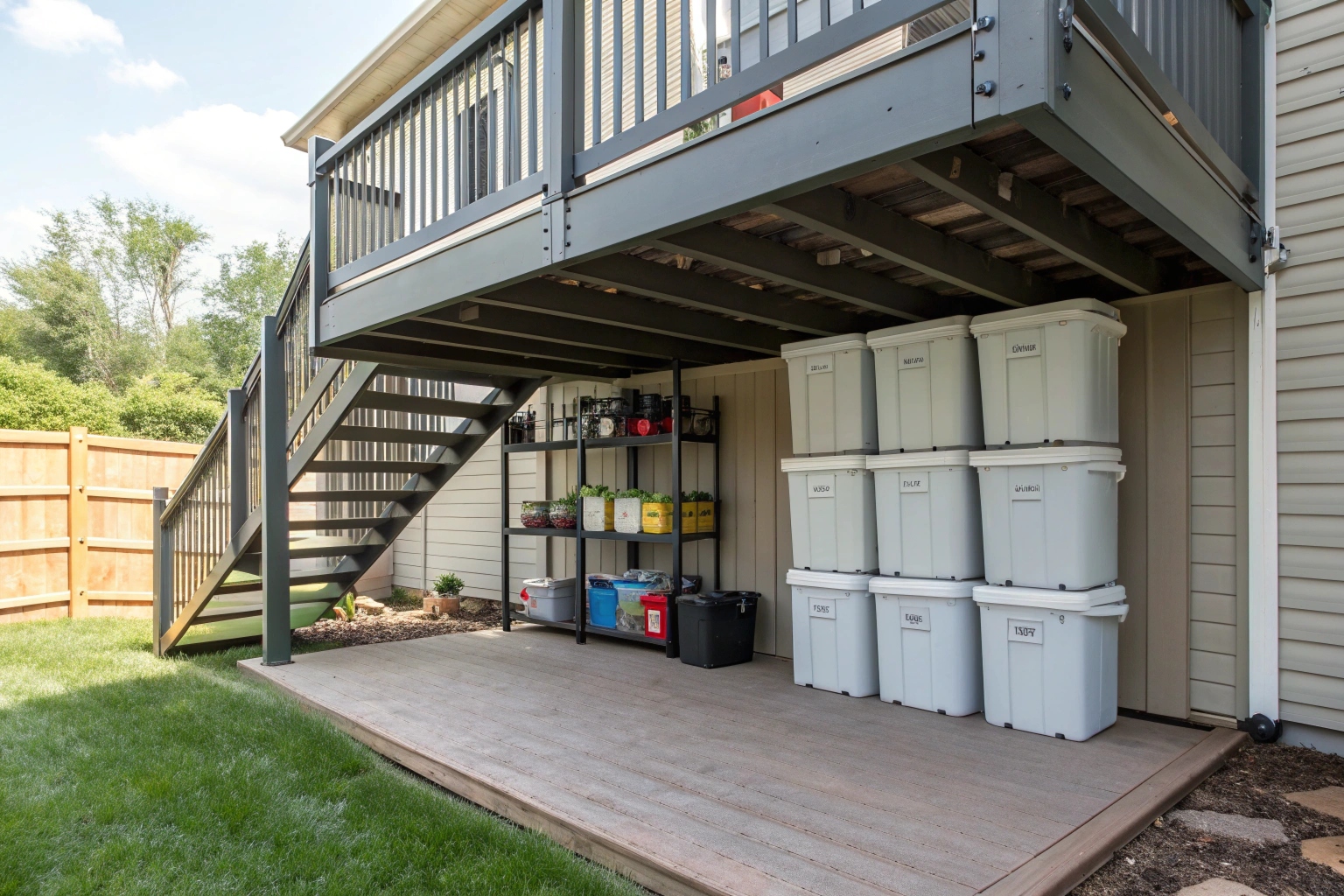
The space underneath your deck shouldn’t just sit empty:
- Storage for tools, equipment, garden supplies
- Covered carport or vehicle protection
- Workshop or hobby area with power
- Sheltered entertaining zone for wet weather
- Garden potting area out of the rain
- Protecting outdoor furniture or kids’ play equipment
Size and proportion matter too. The deck should suit your property, not overwhelm it. We measure everything properly, make sure the stairs land where they need to, and integrate the whole structure with your home’s existing architecture. When it’s done right, it looks like it was always meant to be there.
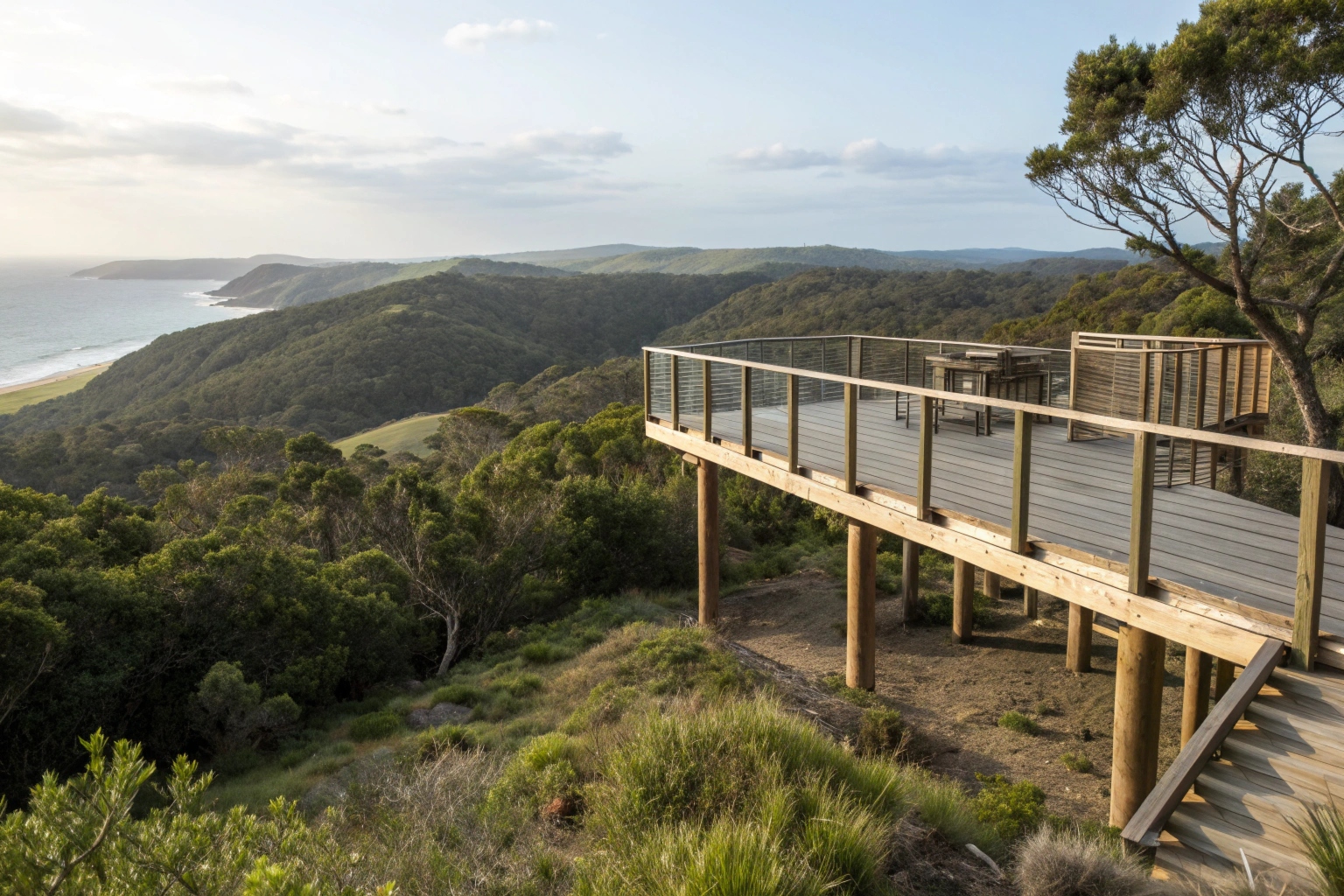
Materials & Construction Methods That Last
The framework for elevated decks comes down to two main options – steel or treated timber posts and beams. Steel gives you maximum strength and durability, especially for higher decks or coastal locations where salt air is a factor. Treated timber works well too, particularly hardwood posts that are rated for in-ground use. We match the materials to your specific height, exposure, and budget.
For the actual decking surface, you’ve got choices. Treated pine is economical and works fine if you’re happy to maintain it. Hardwoods like spotted gum or ironbark look great and last decades with minimal work. Composite decking costs more upfront but you’re basically done with maintenance – no oiling, no splinters, and it holds up well at height where weather exposure is tougher.
The construction process goes like this:
- Foundation holes dug and inspected
- Engineered footings poured to specification
- Posts installed and braced correctly
- Bearer and joist framework built level
- Decking boards laid with proper spacing
- Balustrades and stairs constructed to code
- Final inspections and certification
Balustrade systems need special attention. Glass panels are popular because they don’t block views, but they need regular cleaning in coastal areas. Timber or powder-coated aluminium balusters work well and need less maintenance. Wire or cable systems give you that modern look while meeting safety requirements.
All fixings and hardware get rated for the loads they’re carrying. Coastal-resistant finishes are standard around here – the salt air will find any weak point if you cut corners on materials
Enhancement Options Worth Considering
Once you’ve got the basic elevated deck structure sorted, there’s plenty you can add to make it more functional and enjoyable. Pergola or roof coverage is probably the most popular addition we see. Gives you shade, weather protection, and defines the space better. Some clients go with full roofing, others prefer open pergola beams that you can grow plants over.
Built-in seating along the edges makes sense on elevated decks. You’re already up there with the views, so permanent bench seating with storage underneath is both practical and space-efficient. Way better than dragging furniture up and down stairs.
Lighting systems change how you use the deck. Integrated LED strips along stairs and edges make evening access safe, plus deck lighting under balustrades creates ambience without blocking views. Solar options work well for areas that catch good sun during the day.
Other enhancements clients often add:
- Outdoor kitchen or BBQ area with weather protection
- Fire pit or gas heating for cooler months
- Privacy screens on certain sides
- Connecting doors or bi-folds to indoor living spaces
- Sound systems wired properly for outdoor use
- Shade sails or retractable awnings
The cost varies depending what you’re adding, but most enhancements are easier to include during initial construction rather than retrofitting later. We price everything separately so you can pick what works for your budget now and add more down the track if you want. The main thing is planning for it structurally – running electrical conduit, reinforcing posts for shade structures, allowing clearances for doors.
Frequently Asked Questions

Ready to Make Your Elevated Property Work Better?
If you’ve got a sloping block on the Central Coast that’s not being used properly, or you’re sitting on views that you can’t actually enjoy, an elevated deck might be exactly what your property needs. We’ve built enough of them around Gosford, Terrigal, Woy Woy, Erina, and Wyong to know what works and what doesn’t.
The process is straightforward – we come out to your property, have a look at the terrain, talk about what you’re trying to achieve, and give you honest advice on whether an elevated deck makes sense. Sometimes it does, sometimes there’s a better solution. But you won’t know until we assess your specific site.
We handle everything – the engineering coordination, council approvals, construction, inspections, and certification. You’re dealing with one team from start to finish, which makes the whole thing easier. And because we’re local and we’ve been doing this for years, we understand Central Coast conditions and what it takes to build something that lasts.
Get in touch for a free site assessment and quote. We’ll measure up, discuss your options, and give you realistic pricing with no pressure. If an elevated deck is right for your property, we’ll build it properly. If it’s not, we’ll tell you that too.
Call us today or fill out the contact form, and we’ll be in touch within 24 hours. Your sloping block has potential – let’s figure out how to unlock it.

Let’s Talk
Pergolas Central Coast Specialist is an organization that provides high-quality pergola and outdoor living structures. Our company has been in business for years and we offer a wide range of services including Custom Projects, New Construction Services. If you’re interested in learning more about what this company can do for you, contact them today.
