

Your deck was perfect when you first built it. But now? The kids are bigger, you’re entertaining more often, and that deck just doesn’t quite cut it anymore. Maybe you’re squeezing everyone around one table when you’d rather have a proper dining zone and a separate lounge area. Or maybe you’ve added a pool and realised your deck doesn’t connect to it the way you’d like.
Here’s the good news – you don’t need to rip everything out and start from scratch. A deck extension lets you keep what’s working and add what’s missing. It’s way more cost-effective than building an entirely new deck, and it increases your usable outdoor space without the hassle of a major renovation.
Central Coast properties are made for outdoor living. With our mild coastal climate, your deck should be working for you year-round. Whether you’re in Gosford, Terrigal, Erina, Woy Woy, or Wyong, extending your existing deck creates the extra room your family actually needs – without blowing the budget.
The right deck extension doesn’t just add square metres. It adds value to your property and gives you distinct zones for cooking, dining, lounging, or just soaking up the coastal breeze. And when it’s done properly with quality materials that suit Central Coast conditions, it’ll look like it was always meant to be there.
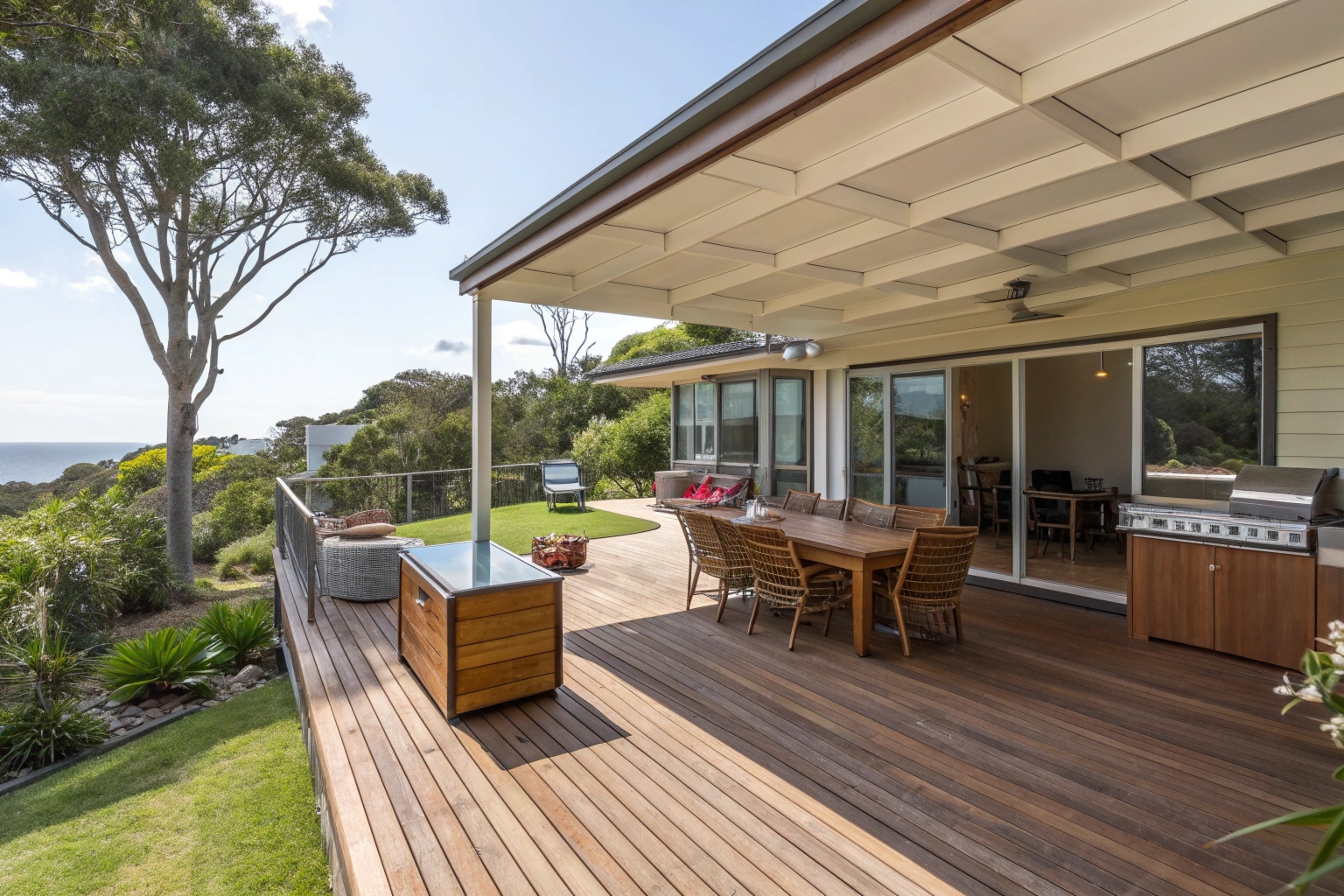
Why Extend Your Existing Deck
Most families don’t wake up one day and decide they need a deck extension out of nowhere. It’s usually because something’s changed. The kids are older and bringing mates around. You’re hosting more Sunday barbies. Or you’ve finally bought that outdoor setting you’ve been eyeing off, only to realise there’s nowhere to actually put it.
Extending your deck solves these problems without the massive cost and disruption of building something completely new. You’re working with what you’ve already got, which means less time, less money, and less stress.
Think about how you actually use your outdoor space. Right now, you’re probably cramming the BBQ, the dining table, and the lounge chairs all into one area. It works, but it’s not ideal. A deck extension gives you room to create proper zones – a dedicated dining spot over here, a lounging area over there, maybe even a built-in bar or outdoor kitchen if you’re keen.
And here’s the thing people don’t always think about – a well-done deck extension adds serious value to your property. Central Coast buyers want outdoor entertaining space. They want to see a deck that’s big enough to actually use. When your deck flows properly and gives you multiple functional areas, it’s a genuine selling point down the track.
Plus, if you’ve got a pool or garden you want to connect to, an extension creates that seamless flow between different parts of your backyard. It ties everything together instead of leaving your deck feeling like an island.
Types of Deck Extensions
Not all deck extensions are the same, and that’s a good thing – because every property’s different. What works for a flat block in Erina might not suit a sloping property in Terrigal. The trick is figuring out which type of extension makes sense for your situation.
Wraparound extensions are popular on Central Coast homes because they connect multiple sides of your house. Instead of just pushing the deck out in one direction, you’re extending it around a corner or along another wall. This works brilliantly if you want to take advantage of views in different directions or create separate zones that feel connected.
If your property’s fairly level, a level extension is the most straightforward option. You’re essentially making your deck bigger on the same plane, which creates seamless flow from the original deck to the new section. No steps, no changes in height – just more space.
Got a sloping block? Multi-level extensions are your friend. Instead of fighting the slope, you work with it by adding a lower or upper level. This actually creates natural separation between different activity areas without needing screens or dividers.
If you’re after year-round usability, a covered extension with a pergola or roof means you’re not running inside every time there’s a bit of weather. And if you’ve got a pool, a connecting extension bridges that gap between your deck and the pool area, so you’re not walking across grass in wet feet.
Design Considerations
Here’s where a lot of people get tripped up – they treat the extension like a separate project instead of thinking about how it needs to work with what’s already there. The best deck extensions look like they were part of the original plan, not something tacked on later.
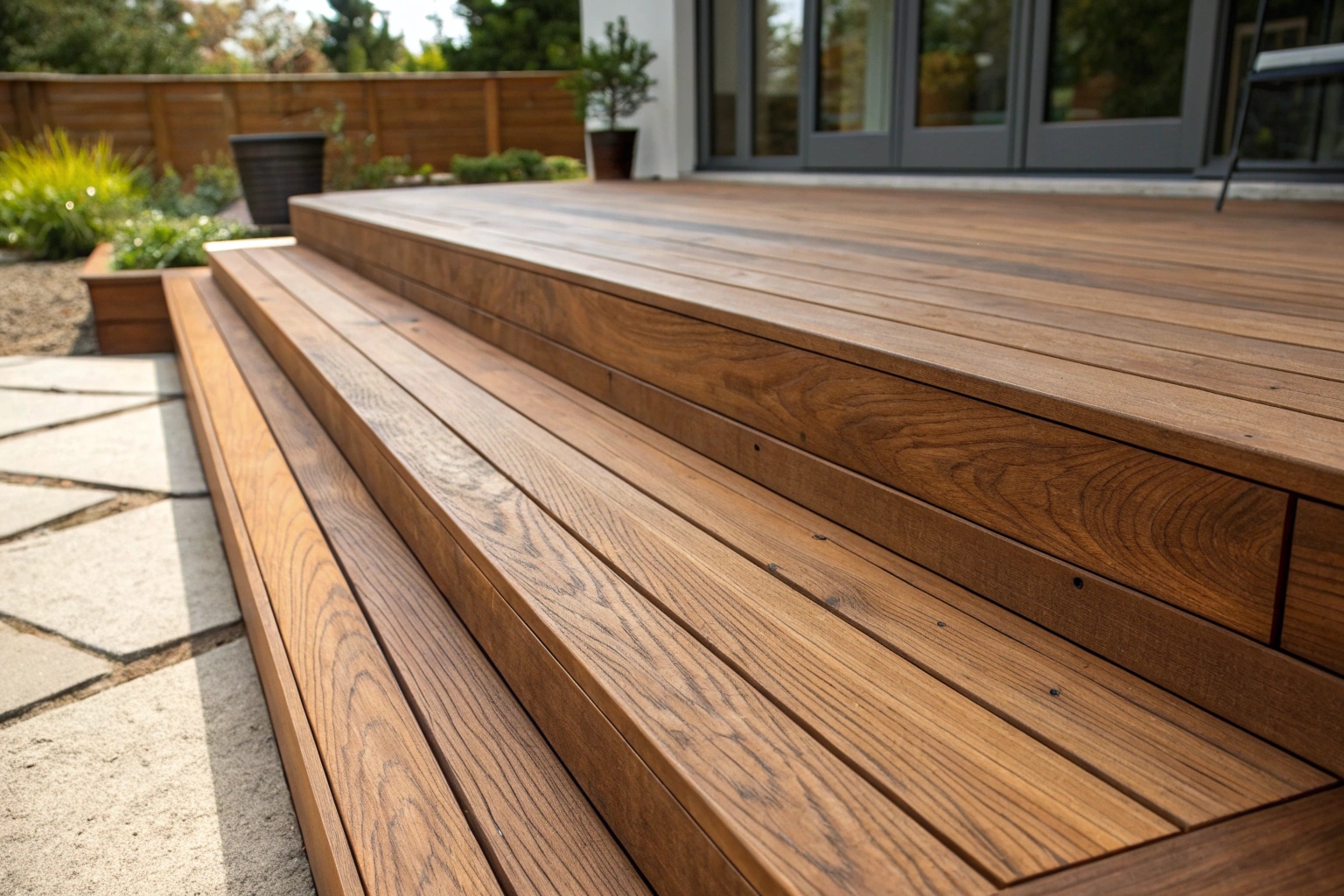
Matching materials is the obvious starting point. If your existing deck’s built from treated pine, you don’t want to extend it with composite decking – it’ll stick out like a sore thumb. Same goes for the colour, the board width, even the spacing between boards. Getting this stuff right makes the whole deck feel cohesive.
But matching isn’t just about looks. You’ve got to think about structural integrity too. Your extension needs proper support and footings, especially if you’re adding a decent amount of space. The last thing you want is the new section bouncing or moving differently to the original deck. That’s not just annoying – it’s a safety issue.
Planning the layout matters more than people realise. You need to think about where furniture’s going to go, how people will move around, whether you need stairs or ramp access to the yard. If you’re extending for a specific purpose – like adding an outdoor dining area – you need to make sure there’s actually enough room for the table, chairs, and people to walk past without squeezing through.
And don’t forget about maintaining the aesthetic. If your original deck has certain design features – like decorative posts or a particular balustrade style – carrying those through to the extension keeps everything looking intentional.
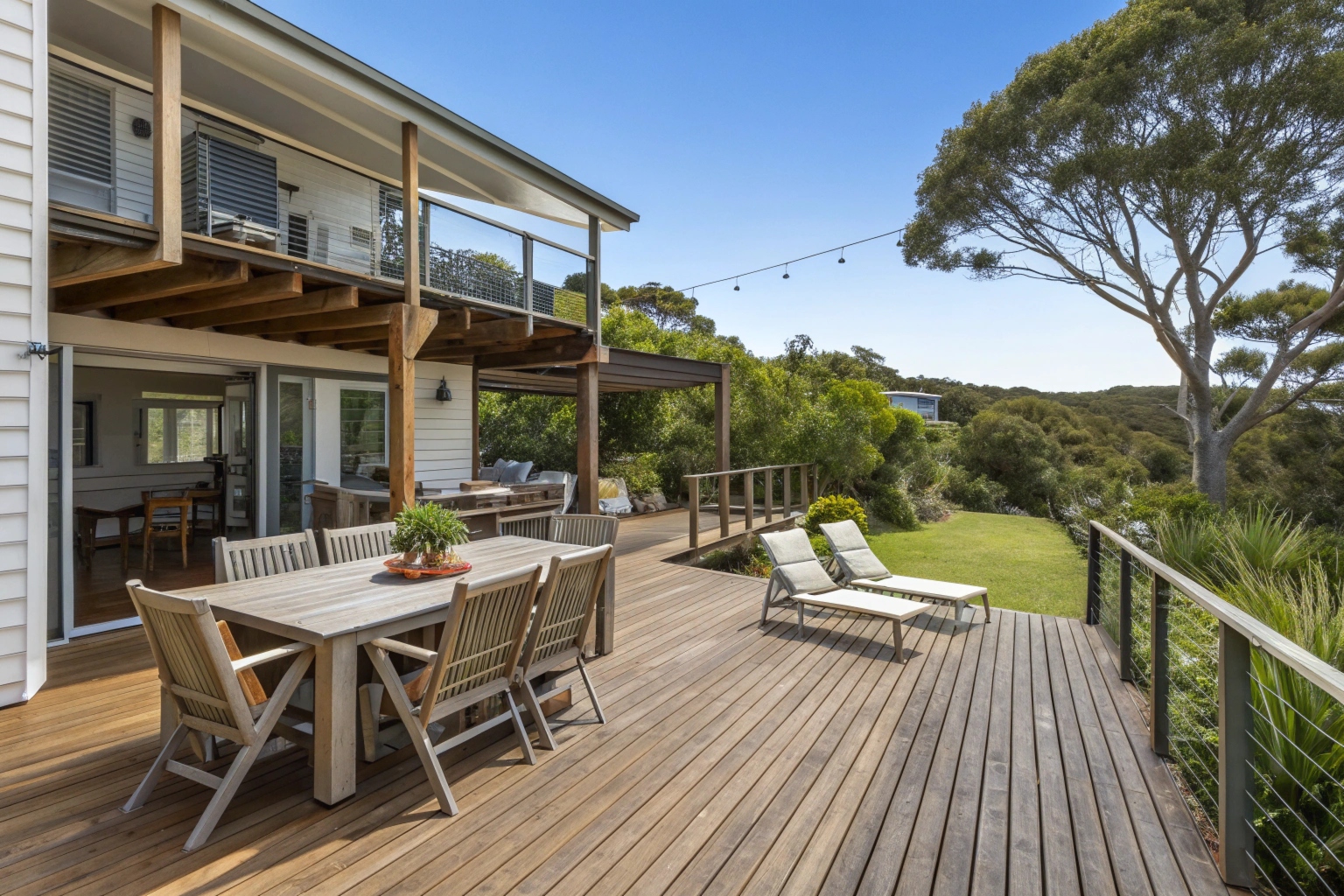
Material Options for Central Coast
Living on the Central Coast means your deck’s dealing with salt air, humidity, and plenty of sun. You can’t just pick any material and hope for the best – you need something that’ll actually hold up to coastal conditions.
Treated pine is still the go-to for a lot of Central Coast decks. It’s affordable, it looks good, and when it’s properly treated, it handles our climate pretty well. The trade-off? You’ll need to maintain it with regular oiling or staining to keep it looking decent and protected from the elements.
If you want to skip the maintenance headaches, composite decking is worth considering. It doesn’t rot, it doesn’t splinter, and you’re not spending your weekends re-oiling it. The upfront cost’s higher, but you’re saving time and money down the track. Just make sure you’re getting quality composite – the cheap stuff fades and gets hot underfoot in summer.
Hardwood timber sits somewhere in the middle. Materials like spotted gum or ironbark give you that natural timber look with serious durability. They handle coastal weather brilliantly and age beautifully if you look after them. They’re more expensive than treated pine but they’ll outlast it too.
Whatever decking material you choose, don’t forget about balustrades and railings. They need to match or complement your decking, and they cop the same weather as the boards. Stainless steel or aluminium work well near the coast because they don’t corrode. Timber balustrades look great but need the same maintenance as the deck itself.
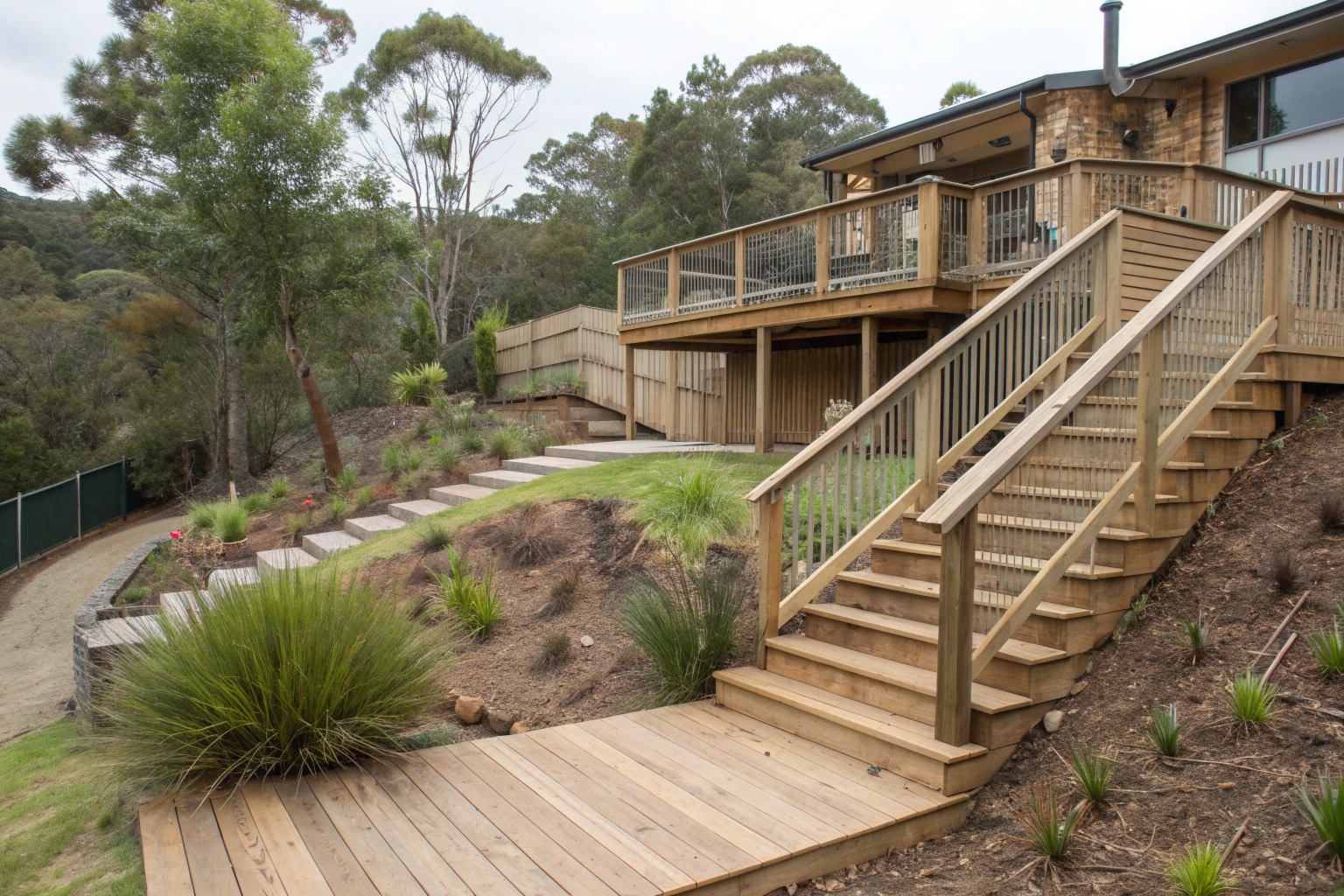
Structural Requirements
This is the bit that separates a proper deck extension from a dodgy one. You can’t just bolt some extra boards onto your existing deck and call it done. There’s actual engineering involved, even if it doesn’t look complicated from the outside.
Foundation and footings need to be assessed properly. Your extension’s going to need its own support system, and that means footings that go deep enough and are spaced correctly for the load they’re carrying. The soil on the Central Coast can vary heaps depending on where you are – sandy soil near the coast behaves differently to the clay you get further inland. That affects how footings need to be designed.
Load-bearing calculations aren’t optional. Your deck needs to safely support people, furniture, maybe a BBQ, possibly a spa. A structural engineer or experienced builder works out how much weight each part of the deck needs to carry and designs the frame accordingly. Skipping this step is how you end up with a deck that bounces, sags, or worse.
The extension also needs to integrate properly with your existing deck framework. That means connecting the new joists and beams to the old structure in a way that transfers load correctly. Done right, the whole thing acts as one solid deck.And here’s the big one – Central Coast Council regulations and Australian building standards both apply. Depending on the size and height of your extension, you might need council approval. Even if you don’t, the work still needs to meet the building code. This isn’t red tape for the sake of it – it’s making sure your deck’s safe and built to last.
Planning & Approval Process
Here’s what most people want to know straight up – do I need council approval? The answer depends on a few things. If your extension takes your total deck area over a certain size, or if it’s close to boundary lines, or if you’re in a heritage area or near the coast, you’ll probably need approval from Central Coast Council. A decent builder will tell you upfront whether your project needs it or not.
Even when approval’s required, it’s not the nightmare people think it is. Site assessment happens first – someone comes out, looks at your property, checks the existing deck, figures out what’s feasible. This is where you find out if your plans actually work with your block’s layout, slope, and any restrictions.
Timeline-wise, you’re usually looking at 2-3 weeks once the work starts, depending on the size of the extension. Weather can stretch that out a bit – nobody’s laying decking in the pouring rain. Council approval adds time upfront if it’s needed, but that’s sorted before any building starts.
One thing people don’t always think about is working around existing landscaping. If you’ve got garden beds, trees, or pavers where the extension’s going, that needs to be dealt with. Sometimes it’s just a matter of shifting things, other times you’re redesigning that part of the yard.
Budget-wise, extensions are almost always better value than new builds. You’re not paying for a whole new substructure, and you’re using the existing deck as a starting point. Just make sure you’re getting quotes that include everything – materials, labour, any council fees, and disposal of waste.
Enhancing Your Extension
Once you’ve sorted the basics of your deck extension, you can start thinking about the extras that turn it from “more deck space” into something you’ll actually use every day.
Built-in seating or storage is one of those things that sounds fancy but makes heaps of sense. Instead of dragging chairs around, you’ve got permanent bench seating along one edge. Add storage underneath and suddenly you’ve got somewhere to stash cushions, pool toys, or BBQ tools. It’s functional and it saves space.
Lighting changes everything for evening use. You don’t need anything complicated – some deck lights along the stairs, maybe LED strips under the handrails, or overhead string lights if you’ve added a pergola. Suddenly you’re not packing it in when the sun goes down.
If your deck’s exposed, screening or privacy options make the space more usable. Lattice screens, shade cloth, or even planted hedges give you a bit of separation from neighbours without making the area feel closed in. Depends on your block and how much privacy you’re after.
Connecting your extension to an outdoor kitchen or fire pit creates a proper entertaining hub. The deck becomes the link between different outdoor zones instead of just being one isolated area. Same goes for shade structures – a pergola or sail shade over part of the extension means you can use the space in the middle of the day without getting fried.
These additions don’t have to happen all at once. A lot of people start with the extension itself and add features later as budget allows.
Frequently Asked Questions

Ready to Extend Your Deck?
If you’re done squeezing everyone onto a deck that’s too small, it’s time to do something about it. A deck extension gives you the space your family actually needs without the cost and hassle of starting from scratch.
The right extension makes your outdoor area work harder. Separate zones for dining and lounging. Room for the BBQ without it being in everyone’s way. Proper connection between your deck and the rest of your backyard. And when it’s built with materials that suit Central Coast conditions, it’ll last for years without falling apart.
Getting started’s straightforward. A site visit shows what’s possible with your property, what approvals you might need, and what the realistic timeline and budget looks like. From there, it’s about designing an extension that fits how you actually use your outdoor space – not just adding square metres for the sake of it.
Whether you’re in Gosford, Terrigal, Erina, Woy Woy, Wyong, or anywhere else on the Central Coast, a deck extension’s one of the smartest ways to increase your usable outdoor space. You’re working with what you’ve got and making it better.
Don’t wait until next summer when you’re cramming guests onto a deck that’s still too small. Get the extension sorted now and you’ll be ready for the next round of barbies, birthday parties, or just Sunday arvos in the sun.

Let’s Talk
Pergolas Central Coast Specialist is an organization that provides high-quality pergola and outdoor living structures. Our company has been in business for years and we offer a wide range of services including Custom Projects, New Construction Services. If you’re interested in learning more about what this company can do for you, contact them today.
