

When you’re sitting on your deck at 2pm on a summer afternoon and the glare’s so intense you can’t see your phone screen, or when you’ve got mates coming over for lunch and there’s nowhere comfortable to sit outside – that’s when you start thinking about awning installation. Here on the Central Coast, we get about 300 days of sunshine a year, which sounds great until you’re trying to enjoy your outdoor space and getting cooked in the process.
Installing quality awnings isn’t just about shade though. It’s about protecting your outdoor furniture from fading, keeping your west-facing rooms cooler so you’re not running the air con all day, and creating that extra living space where you can actually relax without squinting or sweating. And if you’re in coastal areas like Terrigal, Avoca Beach, or Wamberal, you need awning systems that can handle salt air and those southerly gales that come through without corroding or ripping apart.
Pergolas Central Coast Specialist has been installing awnings across the Central Coast, and we’ve seen pretty much every scenario – from simple window awnings on brick homes in Bateau Bay to full motorised retractable systems on Copacabana beachfront properties. We service everywhere from Gosford through to Wyong, and we understand what works in our specific climate. Whether you’re after a fixed awning for permanent coverage, a retractable system for flexibility, or something custom-designed to match your home, we’ll help you work out what suits your space, your budget, and how you actually use your outdoor areas.
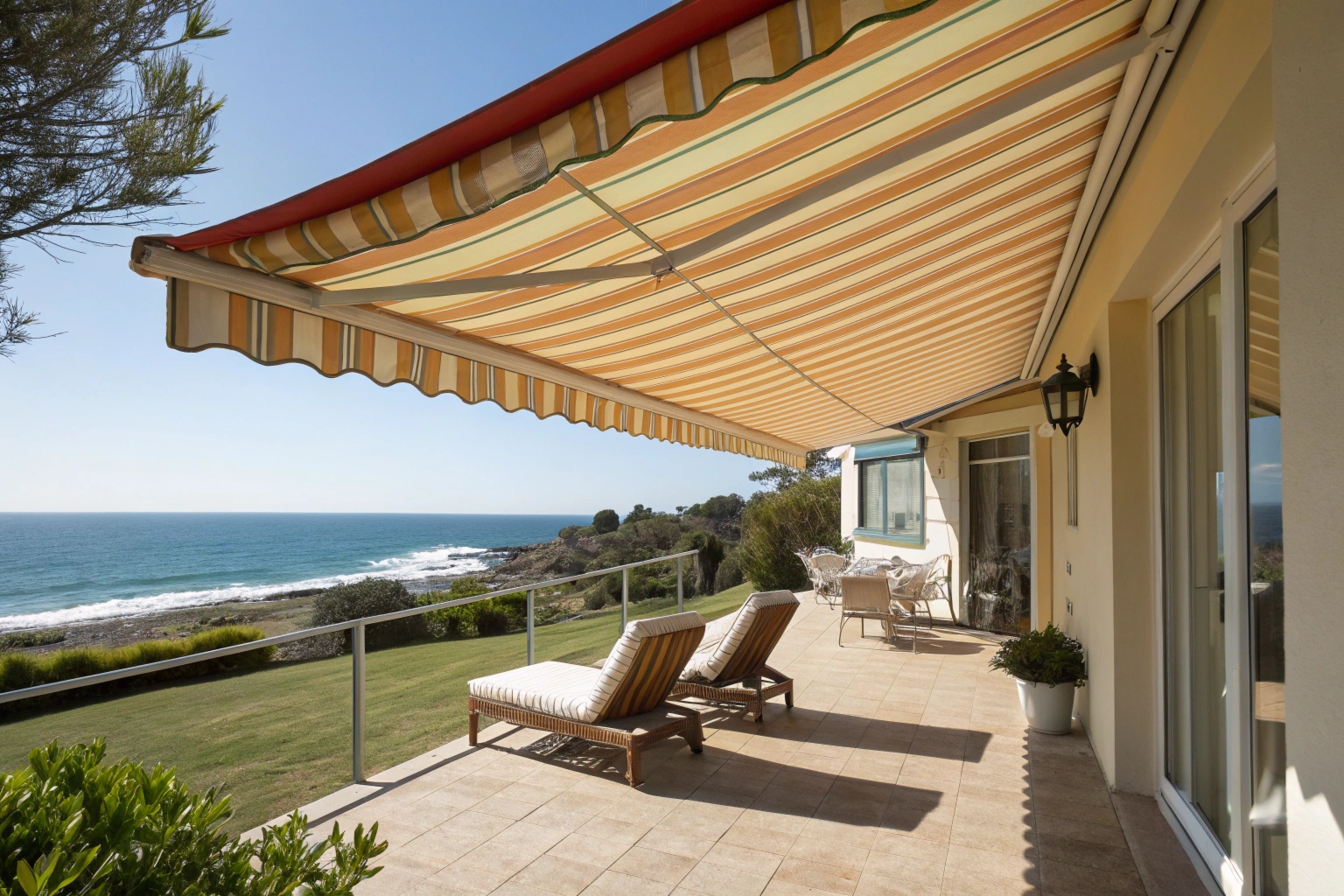
Types of Awnings We Install Across the Central Coast
Not all awnings are created equal, and what works for your neighbour’s place mightn’t be right for yours. Here’s what you’ve got to choose from when you’re looking at awning installation:
Retractable awnings are probably the most popular option we install these days. They extend out when you need shade and retract back when you want full sun or when those Central Coast storms roll in. Most people go for these on decks and patios where they want flexibility – you can control exactly how much coverage you need depending on the time of day or season.
Fixed awnings are the permanent coverage option. They’re always there providing protection, which makes them perfect for window installations or areas where you know you’ll always want shade. They’re generally more affordable than retractable systems and require less maintenance since there’s no moving parts to worry about.
Folding arm awnings are what most people picture when they think retractable systems. The arms fold out smoothly, supporting the fabric canopy without needing posts or supports dropping down. They’re great for patios and deck areas where you don’t want any obstructions.
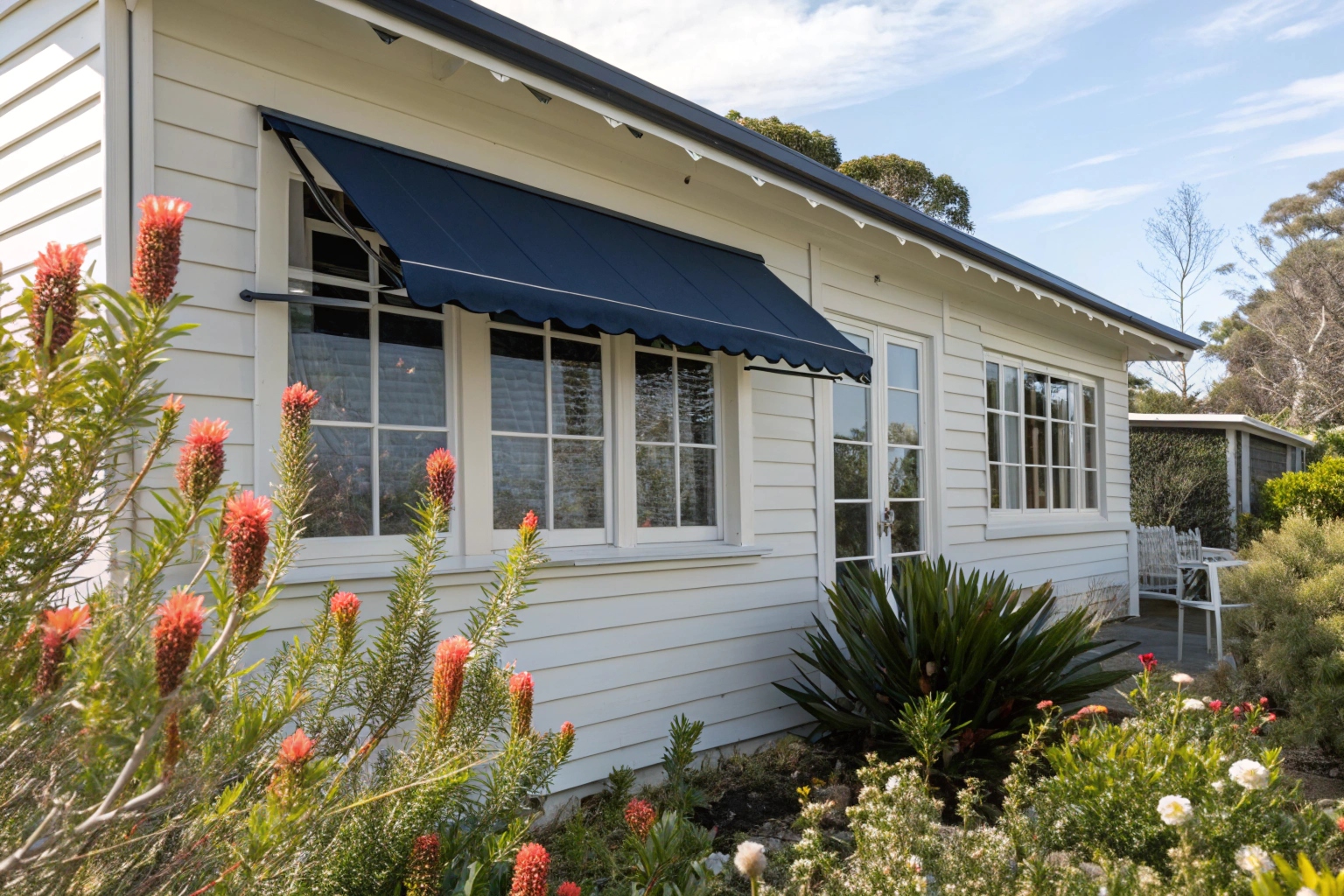
Window awnings are smaller units designed specifically to protect your windows from direct sun. They’re brilliant for west-facing windows that cop the afternoon heat – you’ll notice a real difference in your indoor temperature once they’re installed.When it comes to operation, you can go manual (hand crank) or motorised. Manual’s cheaper upfront, but if you’ve got a larger awning or you’re going to be adjusting it regularly, motorised makes life a lot easier. Some of the motorised systems even come with wind sensors that’ll automatically retract the awning if conditions get too rough.
Why Professional Awning Installation Makes a Difference
You could probably find a cheaper quote from someone operating out of their ute, but there’s reasons why professional awning installation costs what it does – and most of them become pretty obvious when you’re still using your awning five years later instead of replacing it.
Properly installed awnings reduce your indoor temperature by blocking direct sun before it hits your windows and walls. We’ve had clients tell us their air conditioning bills dropped by 20-30% after installing window awnings on their west-facing rooms. That’s real money back in your pocket, especially during Central Coast summers.
UV protection is another big one that people don’t always think about until they’ve already watched their outdoor furniture fade. Quality awning fabric blocks up to 98% of UV rays, which means your deck furniture, outdoor cushions, and even the flooring near your windows lasts years longer. When you’ve dropped a few thousand on decent outdoor furniture, that protection matters.
The lifestyle benefit’s probably the most noticeable though. Your outdoor space becomes usable year-round instead of being too hot in summer or getting rained on when the weather turns. You can actually sit outside at midday without getting cooked, and light rain doesn’t mean everyone’s running inside. For families who entertain regularly or just want to use their deck area more often, that’s a game-changer.
And if you’re thinking about resale value down the track, quality awnings add genuine street appeal. They finish off the look of your home and show potential buyers that the outdoor spaces are designed for actual living, not just decoration.
Central Coast Climate Considerations for Awning Installation
Here’s the thing about installing awnings on the Central Coast – what works perfectly fine in Parramatta or Penrith mightn’t last two years in Terrigal or Wamberal. Our coastal conditions are pretty specific, and if you don’t account for them upfront, you’ll end up replacing your awning way sooner than you should.
Salt air is the big killer for awning systems. That constant ocean breeze carries salt particles that settle on metal frames, fixings, and mechanisms. If you’re using standard powder coating or regular stainless steel fixings, you’ll see corrosion starting within 12-18 months. Marine-grade components and proper coating systems aren’t optional extras here – they’re necessary if you want your awning to last.
Wind resistance is another consideration that gets underestimated. Those southerly gales that come through can rip poorly-installed awnings straight off the wall or snap folding arms like they’re made of plastic. Professional installation means your awning’s engineered and mounted to handle Central Coast wind loads, not just screwed up and hoped for the best.
The intense UV exposure we get means fabric quality matters more than inland areas. Cheaper acrylic fabrics fade and degrade faster in our conditions. You want solution-dyed fabrics that are manufactured for Australian coastal environments – they cost more upfront but they’re not going to look washed out after one summer.And moisture durability isn’t just about rain – it’s the constant humidity we get, especially in areas close to the beach. Frames need proper drainage, fabric needs to dry properly, and mechanisms need to be sealed against moisture ingress.
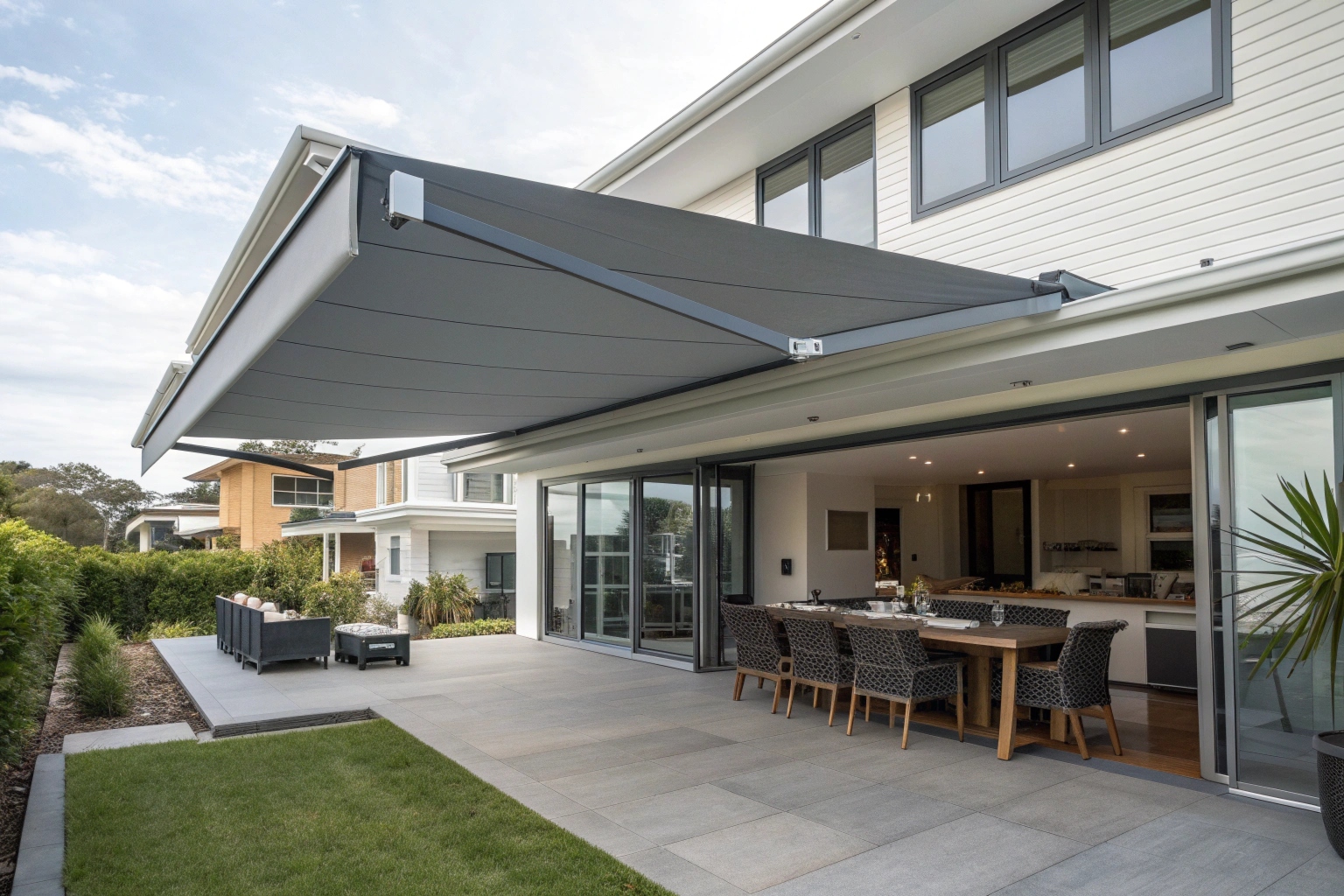
Material and Design Options That Actually Work Here
When you’re choosing materials for your awning installation, you’ve got options – but not all of them make sense for Central Coast conditions.
Fabric choice is where most people start. Canvas looks great and has that traditional appeal, but it requires more maintenance and doesn’t handle our UV exposure as well as modern alternatives. Acrylic fabric is what we recommend for most installations – it’s solution-dyed (colour goes right through the fibre), resists fading brilliantly, and handles coastal weather without breaking down. PVC-coated fabrics are the heavy-duty option for commercial applications or areas that need maximum weather protection, though they don’t breathe as well.
Aluminium frames are pretty much standard for coastal installations. Steel frames are cheaper but they’ll rust eventually no matter what coating you use. Aluminium doesn’t corrode the same way and handles salt air exposure without the constant maintenance headaches.
The powder-coated finish on your frame matters more than you’d think. Standard powder coating might look identical to marine-grade when it’s first installed, but five years later the difference is obvious. We use multi-layer coating systems specifically designed for coastal environments – costs a bit more but your awning still looks decent after a decade instead of two years.
Colour and pattern selection is where you can match your home’s existing aesthetic. Stripes are classic for a reason, solids are more contemporary, and there’s dozens of colours available. We’ll bring samples out so you can see how they look against your actual house in natural light, not just picking from a tiny swatch in an office.And everything’s custom-sized to fit your specific space properly – no trying to make a standard size work when it’s not quite right.
Our Installation Process and What You Can Expect
Professional awning installation isn’t just about screwing a frame to your wall and calling it done – there’s a proper process that makes sure everything’s right.
Site assessment is where we start. We’ll come out to your place, measure up the area, check what your wall or fascia’s made of, and work out the best mounting approach for your specific situation. Sometimes what you think you want needs adjusting once we see the actual space and how sun moves across it during the day.
Structural support evaluation matters more than people realise. Your awning needs to mount to something solid – not just weatherboards or fibro that’ll pull away under load. If we need to reinforce mounting points or add additional support, we’ll tell you upfront before you commit to anything.
Council approval is usually not required for standard residential awnings in most Central Coast areas, but there’s exceptions – heritage areas, certain street-facing installations, or if your property’s got specific overlays. We’ll let you know if council approval’s needed for your specific job.
Installation timeline is typically one day for straightforward residential awnings, maybe two days if we’re doing multiple units or if there’s any reinforcement work needed. We’re not going to leave your house torn apart for weeks.
And the actual mounting and securing is done properly – marine-grade fixings, structural backing where needed, proper flashing and sealing so you don’t get water issues down the track.
Where Awnings Work Best Around Your Property
Different areas around your home benefit from awning installation in different ways, and knowing where they make the most sense helps you get the best value.
Deck and patio coverage is the most common application we see. A retractable folding arm awning over your entertaining area means you can actually use the space when the sun’s directly overhead, and you’ve got the flexibility to retract it when you want full sun or when weather’s getting rough.
Outdoor entertaining areas become way more functional with proper coverage. You’re not herding everyone into the shade under the eaves, and light rain doesn’t shut down the whole gathering. For families who use their outdoor areas regularly, this is where awnings prove their worth.
Window protection for west-facing rooms is probably the most underrated use. Those afternoon sun rooms that turn into ovens by 3pm? Window awnings drop the temperature noticeably and you’re not running air conditioning just to make one room livable.
Poolside shade solutions keep swimmers from getting cooked between dips and protect pool furniture from constant UV exposure. Fixed or retractable awnings work well here depending on how much flexibility you want.Commercial shopfront awnings are their own category – they provide customer comfort, display your business name, and add that professional finished look to your storefront.
Frequently Asked Questions About Awning Installation

Get Your Central Coast Awning Installation Started
If you’re tired of your outdoor areas being too hot to use or watching your furniture fade from constant sun exposure, it’s probably time to sort out proper shade coverage. We install awnings across the entire Central Coast – Gosford, Terrigal, Woy Woy, Erina, Wyong, and everywhere in between.
Pergolas Central Coast Specialist understands Central Coast conditions because we work here every day. We know which materials hold up in salt air, what wind ratings you actually need, and how to install systems that’ll still be working properly in ten years instead of falling apart after two.
Whether you’re after a simple window awning to cool down a problem room, a retractable system for your deck, or something custom-designed for a specific space, we’ll come out for a free site assessment. We’ll measure up, talk through your options, and give you an accurate quote with no pressure and no surprises.
Call us on 02 4019 2014 or fill in the contact form on our website. We’ll get back to you within 24 hours to arrange a time that suits you. Most quotes are done within a week, and typical installations are completed in a day – no month-long projects or endless disruptions.
Your outdoor spaces should be usable and comfortable, not just decorative. Let’s get your awning installation sorted properly.

Let’s Talk
Pergolas Central Coast Specialist is an organization that provides high-quality pergola and outdoor living structures. Our company has been in business for years and we offer a wide range of services including Custom Projects, New Construction Services. If you’re interested in learning more about what this company can do for you, contact them today.
