
Expert Deck Repairs & Restoration Serving Central Coast
Your deck used to be the spot where everyone wanted to hang out on weekends. Now? It’s got boards that creek when you walk on them, splinters that make you nervous about the kids running barefoot, and that timber that’s turned more grey than the colour you remember. Happens all the time here on the Central Coast – between the salt air blowing in off the ocean and those summer storms that roll through, decks take a real beating.
The good news is most deck problems don’t mean you need to rip everything out and start fresh. Professional deck repairs and restoration can bring your outdoor space back to life for way less than a full rebuild. Whether it’s a few dodgy boards in Terrigal, structural issues in Gosford, or a complete refinish needed in Wyong, fixing what you’ve got usually makes more sense than starting over. And done right, a restored deck can give you another 10-15 years of solid use.
Common Deck Problems
- Rotting or Damaged Timber Boards: Soft spots in your deck boards are a dead giveaway that rot’s set in. Usually happens where water sits or around fixing points. Left alone, rot spreads fast and can compromise the whole deck structure pretty quickly.
- Loose or Squeaking Deck Boards: That annoying squeak when you walk across the deck means fixings have worked loose or timber’s shrunk. Not just a noise issue – loose boards are a trip hazard and let water in where it shouldn’t be.
- Faded or Peeling Finishes: UV radiation and weather strip deck finishes off over time. Once the protective coating’s gone, timber dries out, cracks, and starts deteriorating faster. Happens to every deck that’s not maintained regularly.
- Structural Sagging or Instability: When part of your deck feels bouncy or you can see it’s not level anymore, that’s bearer or joist problems. Could be rot, could be undersized framing from the original build, either way needs fixing before it gets worse.
- Termite or Pest Damage: Termites love deck timbers, specially when there’s moisture around. Sometimes you don’t see the damage till you’re standing on a board and it gives way. Regular inspections catch this stuff early before it’s a major problem.
- Rusted or Corroded Fixings: Coastal salt air eats through standard screws and nails. You’ll see rust stains on the timber and fixings that’ve lost their strength. Upgrading to stainless or galvanized fixings stops this happening again.
- Unstable or Damaged Railings: Wobbly handrails aren’t just annoying, they’re dangerous. Posts work loose, fixings corrode, timber rots at ground level. Any railing that moves when you grab it needs immediate attention for safety.
Signs Your Deck Needs Attention
Visible Wood Rot or Soft Spots: Press a screwdriver into suspect areas – if it sinks in easy, you’ve got rot. Check around posts, under pots, anywhere water hangs around.
Splintering Boards Unsafe for Barefoot Use: When the timber surface breaks down into splinters, it’s past just looking rough. Kids and dogs get splinters, boards start cracking, water gets in.
Wobbly Posts or Unstable Feel: Grab your deck posts and give them a shake. Shouldn’t move at all. If there’s movement, foundation’s compromised or fixings have failed.
Water Pooling or Drainage Issues
Decks need to shed water, not collect it. Pooling water means the fall’s wrong or boards have cupped. Either way, it accelerates rot and creates slip hazards when it’s wet.
Cracked or Split Boards: Big cracks down the length of boards let water straight into the timber. Small surface checks are normal, but proper splits need replacing.
Fading Color or Greying Timber
That silver-grey look means the timber surface is breaking down from UV exposure. Not just cosmetic – unprotected timber absorbs moisture, swells and shrinks with weather changes, cracks form, rot starts.

Repair Services Offered
Individual Board Replacement
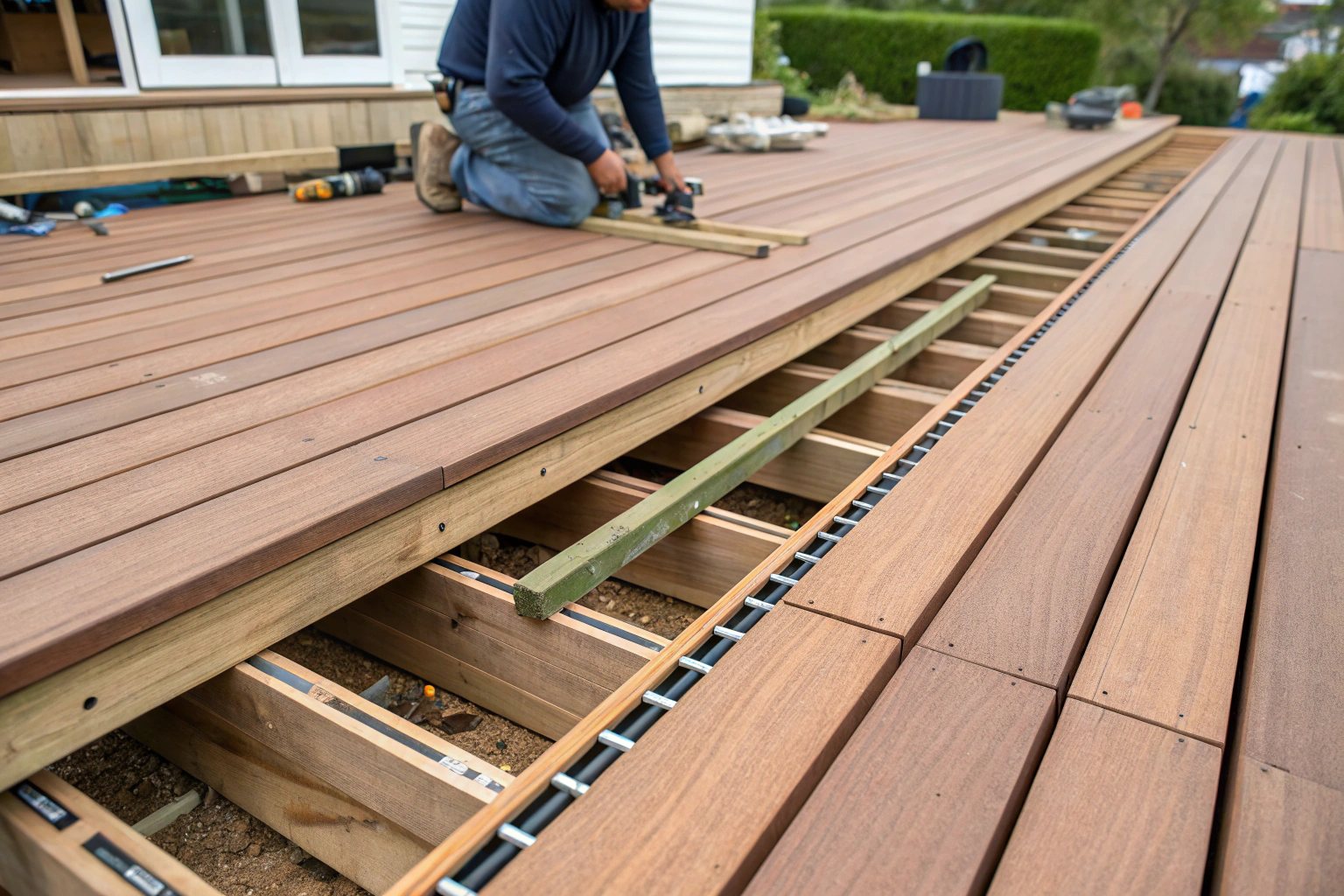
Swapping out damaged boards without touching the good ones saves money. Matching existing timber species and blending new boards in so you can’t tell what’s been replaced takes skill and experience.
Structural Support Reinforcement
Adding or replacing bearers and joists brings a sagging deck back to level. Sometimes means sistering new timber alongside existing frames, sometimes complete replacement of compromised structural members.
Railing and Balustrade Repairs
Fixing loose posts, replacing damaged balusters, reinforcing handrails. All done to current building code heights and spacing requirements. Safety gear that needs to be rock solid.
Stair Rebuilding or Fixing
Deck stairs cop the most wear and often need attention before the main deck. Replacing stringers, fixing treads, making sure rise and going measurements meet code, adding non-slip treatments.
Foundation and Footing Work
When posts have rotted at ground level or footings have moved, fixing the foundation properly means digging out, replacing posts, pouring new concrete if needed. Gets the deck stable again.
Fixing System Upgrades
Replacing rusted nails with stainless screws, upgrading to hidden fixing systems, using proper joist hangers. Modern fixing systems hold better and last longer than what was used 10-15 years back.

Restoration Services
Complete Deck Sanding and Refinishing
Bringing tired timber back to fresh wood underneath. Professional orbital sanders remove weathered surface, old coatings, stains. Creates smooth uniform surface ready for new protective finishes.
Deep Cleaning and Preparation
Pressure cleaning removes dirt, mould, mildew buildup. Brightening treatments bring back natural timber colour. Proper prep work makes the difference between finishes that last and ones that peel off in 12 months.
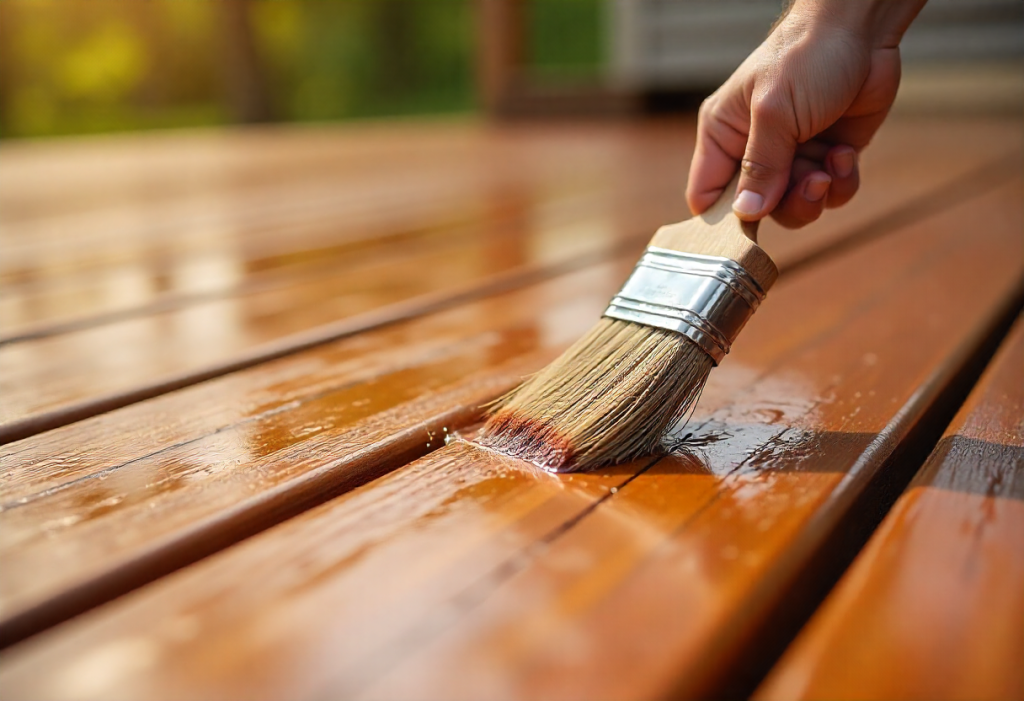
Staining or Oiling Applications
Quality penetrating oils or stains protect timber from moisture and UV while showing off the grain. Different products suit different situations – full sun exposure needs different protection than covered areas.
Protective Sealing Treatments
Sealers create a barrier against water penetration and UV damage. Applied after staining or to natural timber. Re-coating every couple of years keeps the deck protected long-term.
Color Restoration for Faded Timber
Deck timbers that’ve gone grey can come back to rich natural tones with proper treatment. Sometimes takes a two-step process – cleaning then colour restoration products before final protective coatings.
Bringing Old Decks Back to Life
Decks that look like they’re done can often be saved. Combination of repairs, replacement of worst boards, structural work where needed, then complete refinish. Ends up looking like new construction.
Extending Deck Lifespan Significantly
Professional restoration adds 10-15 years to a deck’s usable life. Way cheaper than rebuilding and you keep the deck layout and design you already like. Regular maintenance after that keeps it going even longer.
Refinishing Process
Professional Cleaning Removing Dirt and Mildew: High pressure water blasting strips away years of accumulated grime, mould, algae. Gets into grain and crevices. Proper technique doesn’t damage timber – pressure and distance settings matter. Leaves clean surface for next steps.
Stripping Old Failing Coatings: Chemical strippers remove old varnishes, stains, sealers that’re peeling or worn through. Sometimes needs sanding as well for stubborn coatings. Can’t apply new finishes over failing old ones successfully.
Sanding for Smooth Surface: Multiple passes with different grit sandpapers. Removes raised grain, splinters, stains. Creates uniform surface texture that accepts stains and oils evenly. Dust extraction keeps the mess contained.
Repairing Splits and Cracks: Filling gaps and cracks with flexible fillers, gluing splits that can be saved, deciding what needs replacing. Stopping water ingress points before they cause bigger problems. Creates stable surface for finishing.
Applying Quality Oils or Stains: Penetrating oils soak into timber, providing protection from within. Stains add colour while protecting. Multiple coats build up protection levels. Different products for different timber species and exposure situations.
Protective Sealing for Longevity: Final sealer coats create water-resistant barrier on timber surface. UV blockers prevent sun damage. Modern products last way longer than old-style varnishes. Reapplication every couple years keeps protection current.

Local Service & Expertise
Understanding Central Coast Deck Challenges: Local experience means knowing how salt air, humidity, timber selection, and council requirements affect deck performance—and how to build for longevity.
Experience with Coastal Timber Issues: Specialist knowledge of coastal conditions ensures the right timbers, finishes, and corrosion-resistant fixings are used for salt-exposed environments.
Quality Workmanship and Materials: Properly treated structural timbers,quality hardwood decking, durable fixings, and proven coatings deliver long-lasting results without shortcuts.
Honest Assessments and Recommendations: Clear advice on what truly needs repair, when replacement makes more sense, and where DIY maintenance is practical—focused on trust, not upselling.
Service Areas: Gosford, Terrigal, Woy Woy, Erina, Wyong: Local coverage across the Central Coast ensures fast response times and solutions tailored to each area’s conditions.
Warranty on Repair Work: All repairs are backed by workmanship warranties and quality materials, giving long-term protection for your investment.
