

If you’re after weather protection that doesn’t turn your outdoor area into a cave, polycarbonate roof panels might just be what you need. We’ve installed hundreds of these across the Central Coast – from Terrigal and Avoca right through to Gosford, Woy Woy, Erina, and Wyong – and homeowners keep coming back to the same thing: they love having that natural light while staying dry.
Here’s the thing about coastal living – you want to enjoy being outside, but our weather can be unpredictable. One minute you’re hosting Sunday lunch, next minute everyone’s scrambling for cover. Polycarbonate panels give you shelter from rain, hail, and that intense Central Coast sun without blocking out the light completely. You still get that bright, airy feel that makes outdoor living so good here.
The big advantage over solid roofing? You’re not sitting under a dark roof. These panels let through up to 90% of natural light, so your patio or pergola stays bright and connected to the outdoors. Plus, they’re built to handle salt air and coastal conditions – which matters when you’re this close to the ocean. Whether you’re covering a new pergola, upgrading an existing structure, or finally doing something about that carport that’s been on the list for ages, polycarbonate panels offer a practical, cost-effective solution that actually works for Central Coast conditions.
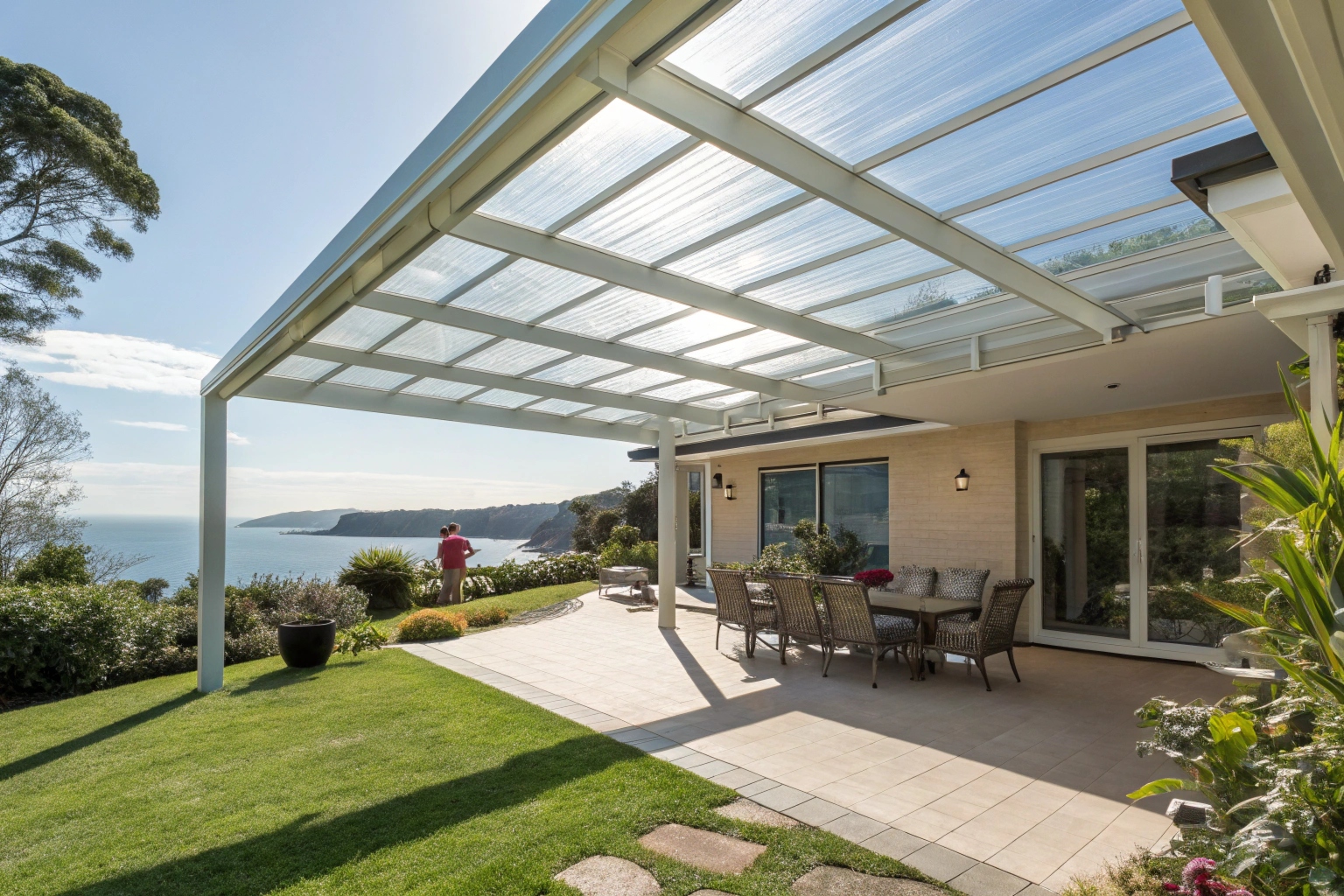
What Are Polycarbonate Roof Panels & Why They Work
Polycarbonate roof panels are basically lightweight plastic sheets designed for roofing. They’re transparent or translucent, which means they let natural light through while keeping the weather out. Think of them as a tougher, more practical alternative to glass – they give you shelter and light without the weight or fragility.
These panels come in various thicknesses (anywhere from 3mm up to 25mm and beyond) and different profiles to match your existing roof. The better quality ones – and this matters on the coast – come with UV coating built in. That coating stops them from yellowing or getting brittle under our Australian sun.
The Real Advantages
The main reason people choose polycarbonate over solid roofing comes down to light. You get up to 90% natural light penetration, so your outdoor area stays bright instead of feeling like you’ve added a dark tunnel to your house. And they’re significantly lighter than glass, which makes installation easier and puts less load on your structure.
But here’s what really matters for everyday use: these panels are virtually unbreakable. Hail, falling branches, cricket balls from the neighbour’s kids – they handle impact way better than glass or even some solid roofing materials. They provide excellent weather protection, reduce your need for artificial lighting during the day, and create that bright, airy outdoor space that makes coastal living worthwhile. Plus, compared to a full solid roof extension, they’re a cost-effective way to add covered area without breaking the budget.
Types of Polycarbonate Panels Available
Not all polycarbonate panels are the same, and choosing the right type makes a difference to how your outdoor area performs. Here’s what’s actually available and what each does.
Clear panels are the most popular choice when you want maximum light transmission. They let through the most natural light and give you that open, bright feel. Great for areas where you want it to feel like you’re barely covered at all.
Tinted options – usually bronze, grey, or opal – cut down on glare and heat. If your outdoor area faces north or west and cops full sun, tinted panels make the space more comfortable without turning it dark. Bronze and grey look good with most home styles, while opal gives you light diffusion with more privacy.
Twin-wall panels have two layers with air pockets in between. That air gap gives you better insulation, which helps with heat management. They’re thicker and provide better temperature control than single-layer sheets.
Corrugated profiles are designed to match Colorbond roofing profiles, so they blend in with your existing roof line. This matters if you’re extending off your house and want everything to look cohesive.
Flat multiwall sheets work well for modern designs or where you need a cleaner, more contemporary look. They come in various thicknesses – from 3mm for basic applications right up to 25mm and beyond for commercial installations or where you need maximum strength.
The important bit: make sure whatever you choose has UV coating. Without it, panels yellow and become brittle within a few years under our Central Coast sun. Quality UV-coated panels last 15-25+ years without losing clarity.
Where Polycarbonate Panels Work Best
Polycarbonate panels are versatile, which means they work across a range of outdoor structures. Here’s where we see them used most often around the Central Coast.
Pergolas and Patios
This is the main application. Adding polycarbonate roofing to a pergola transforms it from a shade structure into an all-weather outdoor room. You get shelter from rain and sun, but the space stays light and bright. Perfect for year-round entertaining or just having your morning coffee without getting rained on.
Carports with Visibility
If you want to protect your car but don’t want a dark, enclosed space, clear or lightly tinted polycarbonate gives you coverage while maintaining visibility. You can still see the sky, and the area doesn’t feel like a cave. Particularly useful if you’re using the carport for other purposes – workspace, storage, or as a covered entertaining extension.
Pool Areas and Outdoor Entertaining
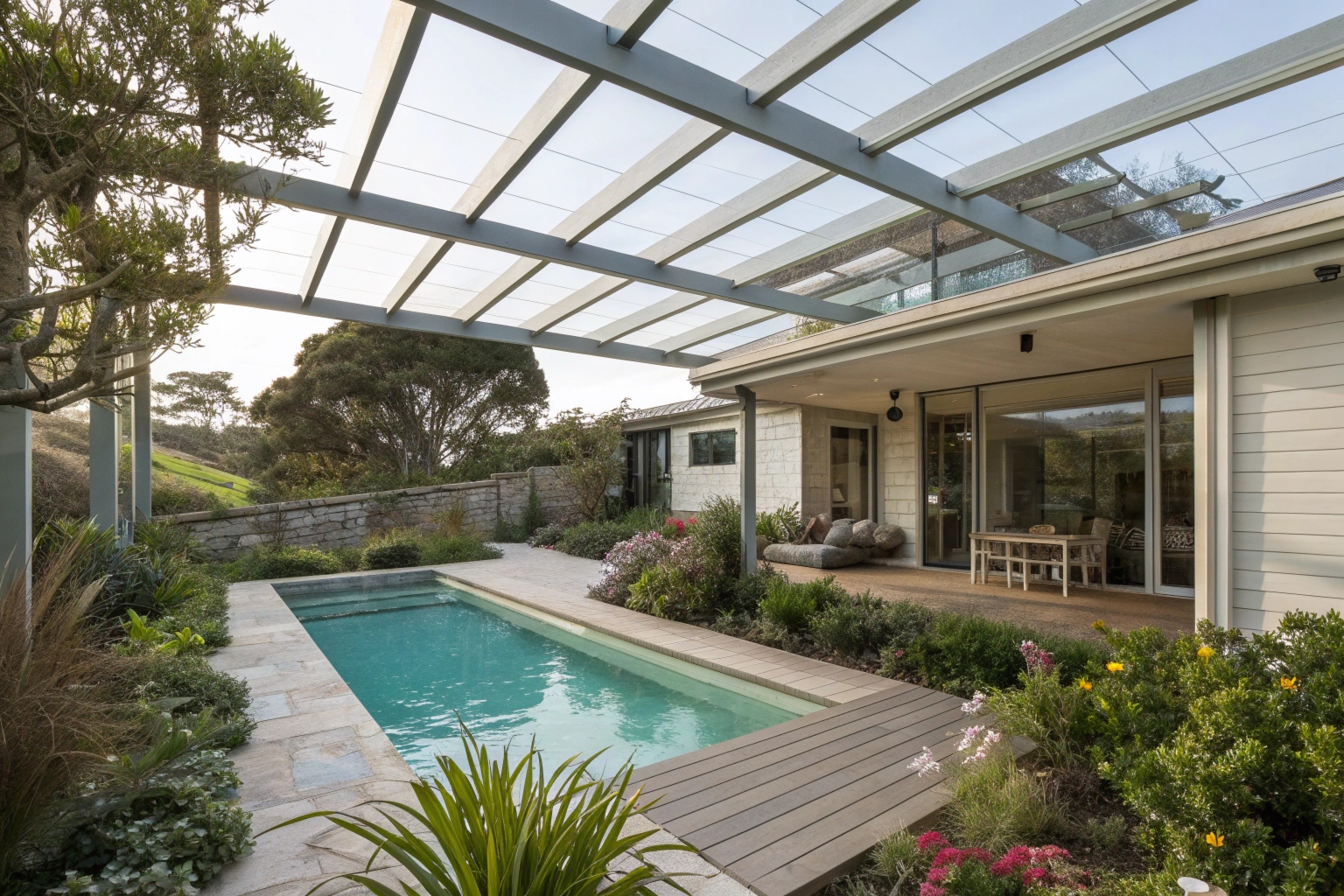
Polycarbonate roofing works well around pools where you want shelter from sun and rain but need that bright, open atmosphere. Same goes for outdoor kitchens, BBQ areas, and dining spaces. You’re extending your usable outdoor area without losing that connection to being outside.
Walkways, Verandas, and Deck Coverage
Covered walkways between buildings, verandah extensions, and deck coverage benefit from the weather protection without creating dark corridors. Balconies get overhead protection while staying light-filled, and garden structures or greenhouse areas get the light they need with shelter from extreme weather.
The common thread across all these applications: you want protection without darkness. That’s what polycarbonate panels deliver – functional coverage that keeps your outdoor spaces feeling like outdoor spaces.
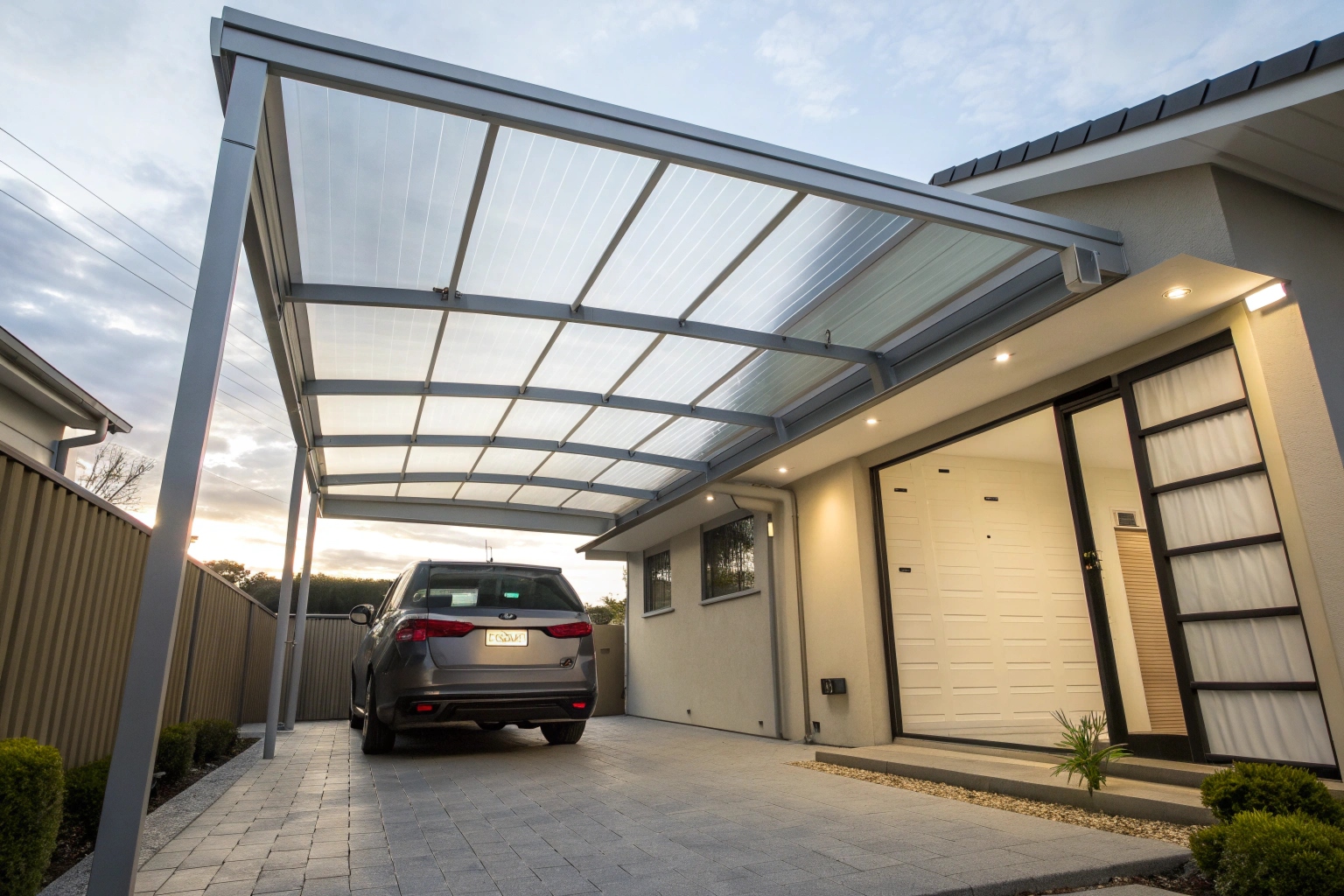
Managing Light and Heat
The whole point of polycarbonate panels is letting in light, but you still need to manage heat and glare – especially on the Central Coast where summer sun can be intense.
Clear panels give you maximum brightness. They’re the go-to choice when natural light is the priority and you’re happy to manage heat through other means like ceiling fans or the natural breeze. Areas that face south or get good shade from trees work well with clear panels.
Tinted panels make a noticeable difference with heat and glare. Bronze or grey tints reduce the intensity of direct sunlight while still keeping the area bright. You’re not sitting in darkness, but you’re also not getting blasted by harsh light. Opal tints diffuse light more, which softens the overall brightness and reduces glare on screens or reflective surfaces.
All quality polycarbonate comes with UV protection built into the coating. This does two things: protects you from harmful UV rays (same as being indoors) and stops the panels themselves from degrading. Without UV coating, panels yellow, crack, and need replacing within a few years.
Compared to solid roofing, polycarbonate actually reduces heat buildup underneath. Solid roofs trap and radiate heat down, making the space underneath hotter. Polycarbonate lets some heat pass through naturally, and with proper ventilation, the area stays more comfortable. Twin-wall panels add thermal insulation through those air pockets, which helps in both summer and winter.
The result: you maintain that connection to being outdoors – you can see sky, track weather changes, enjoy natural light – without the downsides of being completely exposed.
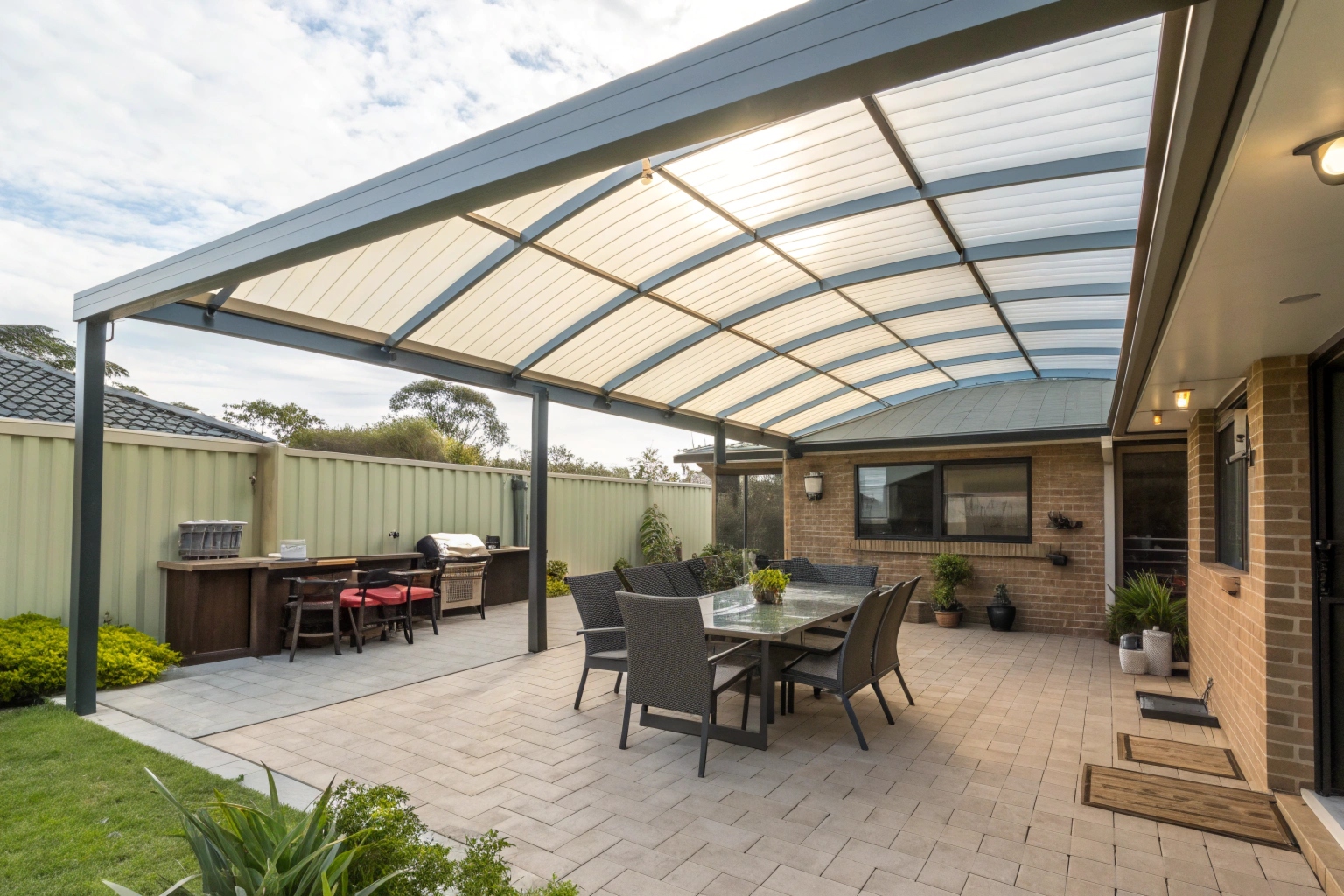
Central Coast Suitability
Coastal conditions are tough on building materials, but polycarbonate panels handle them better than you’d think. Here’s why they work well in our environment.
Salt air is the big one. Metal roofs corrode, timber weathers, and a lot of materials deteriorate faster near the ocean. Quality polycarbonate is salt-air resistant – it doesn’t rust or corrode. The UV coating protects the surface, and the material itself isn’t affected by salt exposure.
Our UV exposure is intense, particularly in summer. Polycarbonate panels designed for Australian conditions are UV-stabilised, which means they’re built to handle our sun without breaking down. That’s the difference between panels that last 15-25+ years and cheap imports that yellow and crack within three.
Hail and impact resistance matters here too. We get summer storms that bring hail, and polycarbonate’s impact resistance means panels survive what would shatter glass or dent metal. They’re rated for wind loads appropriate to coastal areas – which is important given the southerly gales we see through winter and spring.
Temperature fluctuations from cold mornings to hot afternoons don’t cause the same expansion and contraction issues you get with some materials. Polycarbonate handles the range without warping or pulling away from fixings when installed properly.
Bottom line: these panels are designed for Australian coastal conditions. With proper installation and quality materials, they last long-term in our climate without the ongoing maintenance headaches you get from materials that aren’t suited to salt air and intense sun.
Installation Considerations
Getting polycarbonate panels installed properly makes the difference between a roof that lasts decades and one that leaks or fails prematurely. Here’s what actually matters.
Proper framework and support structure comes first. Polycarbonate is lightweight, but it still needs adequate support – especially for wind loads in coastal areas. The framework needs to be engineered for local conditions, not just thrown together. Spacing between purlins depends on panel thickness and expected loads.
Correct pitch for water runoff prevents pooling and leaks. Even slight angles work, but the pitch needs to be enough that water doesn’t sit on the surface. Flat or near-flat installations tend to develop problems over time – dirt accumulates, water pools, and you end up with algae growth or slow leaks.
Sealed fixings are non-negotiable. Every screw hole is a potential leak point. Proper installation uses appropriate washers and sealants to keep water out. Cutting corners here means water ingress, which defeats the whole purpose of having a roof.
Expansion allowance matters more than people realise. Polycarbonate expands and contracts with temperature changes. If panels are fixed too tight without room to move, they crack at fixing points or pull away from flashings. Professional installers know to leave appropriate gaps and use fixings that allow movement.
Integration with existing structures – particularly where panels meet your house or other buildings – needs proper flashing and sealing. This is where most DIY installations fail. Getting the join right prevents water running back into walls or under existing roofing.
Timeline-wise, typical installation takes 1-2 weeks depending on size and complexity. Most of that is framework preparation – the panels themselves go up relatively quick once everything’s properly supported.
Maintenance, Design Flexibility & Getting Started
Low-Maintenance, Long-Lasting Performance
One of the better aspects of polycarbonate panels is how little maintenance they need. Occasional cleaning with mild soap and water keeps them clear – that’s about it. No painting, no sealing, no ongoing treatment. The UV coating maintains clarity over time, and quality panels come with warranty coverage. Expected lifespan is 15-25+ years when installed properly, which makes them a solid long-term investment. Scratch-resistant surfaces handle normal wear without looking tired after a few years.
Design Benefits and Enhancement Options
Polycarbonate creates open, light-filled spaces that maintain visual connection to the sky. Your outdoor area doesn’t feel enclosed or dark – you’re adding shelter without losing that outdoor atmosphere. Modern aesthetic appeal works with most home styles, and colour options (particularly tinted versions) complement different architectural looks. You can combine polycarbonate with solid Colorbond sections for areas where you want full shade, creating zones with different light levels. Enhancement options include integrated guttering, ceiling fans beneath panels for air movement, lighting for evening use, and the option to enclose with screens or blinds later if needed.
Cost-Effectiveness
Compared to glass, polycarbonate is affordable. Installation costs are lower than solid roofing extensions, and you’re reducing ongoing lighting costs by using natural light during the day. Minimal maintenance means low ongoing expenses, and the long-term durability makes them good value for money. You’re getting weather protection and extended outdoor living space without the premium price tag of other roofing options.
Local Central Coast Service
We work across the Central Coast – Gosford, Terrigal, Woy Woy, Erina, Wyong and surrounding areas – with experience in polycarbonate installations that suit local conditions. Quality panel selection, professional fitting and sealing, and understanding local requirements means your installation performs properly long-term.
Frequently Asked Questions

Ready to Add Light-Filled Coverage to Your Outdoor Space?
If you’re looking at options for weather-protected outdoor living that doesn’t turn your patio into a dark cave, polycarbonate panels might be the practical solution you need. They give you shelter from rain, hail, and sun while keeping your outdoor area bright and usable year-round.
We work with homeowners across the Central Coast – from Terrigal, Avoca Beach, and Wamberal through to Gosford, Woy Woy, Erina, and Wyong. Our team understands what works in coastal conditions and what doesn’t, which matters when you’re dealing with salt air, UV exposure, and the weather patterns we get here.
Whether you’re covering an existing pergola, building something new, or finally sorting out that carport project, we provide quality panel selection, professional installation, and straight advice on what actually suits your specific situation. No pressure, no overselling – just clear information about what’s involved, realistic timeframes, and transparent pricing.
The consultation process is straightforward: we come out, look at your space, discuss what you’re trying to achieve, and give you options that make sense for your property and budget. You’ll get a clear idea of what’s possible, what it costs, and how long it takes.
Get in touch to discuss your requirements. We’re local, we’ve done hundreds of these installations across the Central Coast, and we’re happy to answer questions even if you’re still in the early research stage. Sometimes it helps just to talk through options with someone who knows what works in practice, not just in theory.

Let’s Talk
Pergolas Central Coast Specialist is an organization that provides high-quality pergola and outdoor living structures. Our company has been in business for years and we offer a wide range of services including Custom Projects, New Construction Services. If you’re interested in learning more about what this company can do for you, contact them today.
